
Quick Answer
Pick a consolidation warehouse on receiving records, packing needs and route eligibility, not on headline price alone. Ask how arrivals are matched to your order and which photos, measurements and documents are available. For CNCartGo, the Warehouse Storage Policy provides 100 free days from the date the order is marked "Received"; days 101–200 cost USD $0.10 per parcel per day, with a 200-day maximum from Received. After 200 days, the parcel is treated as automatically destroyed and is no longer available for recovery or shipment. Other warehouses set their own terms.
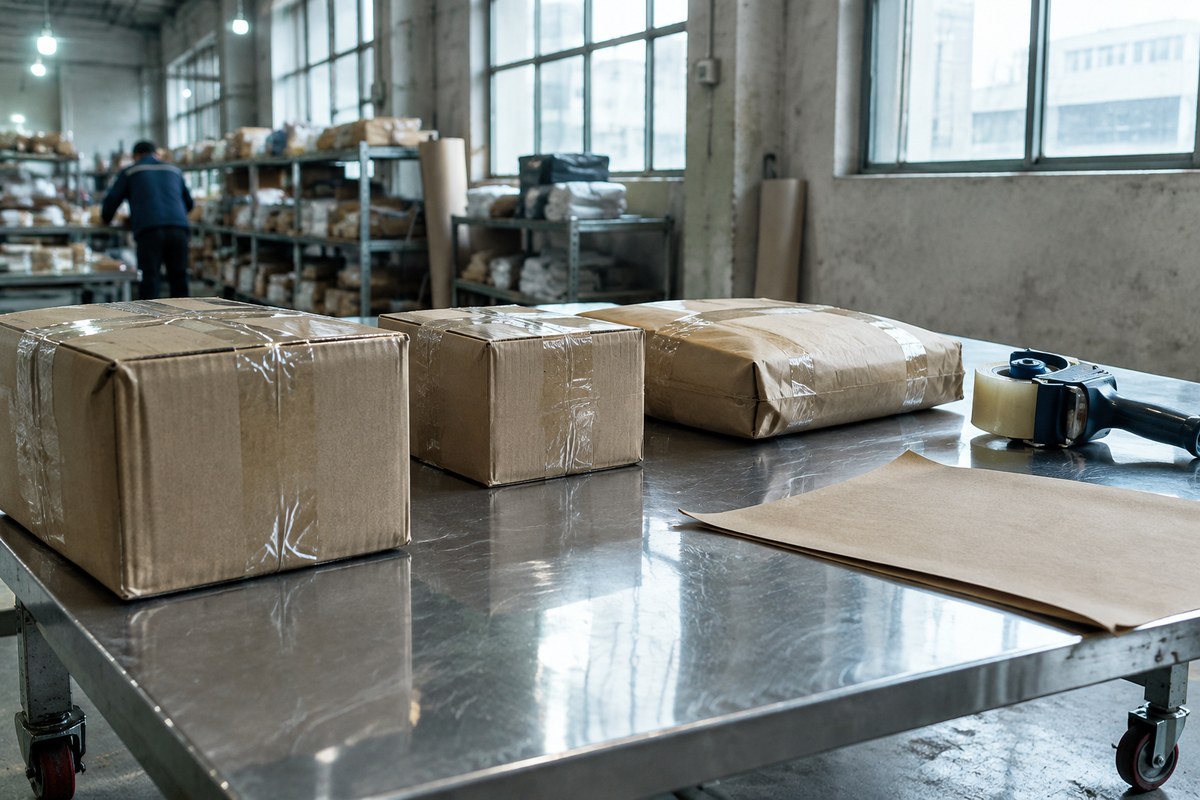
The 12-Check Warehouse Selection Framework
- Receiving accuracy. The warehouse should record seller parcel arrival by tracking number and order ID.
- Photo quality. Confirm which product details, quantity, labels, visible condition and accessories the selected photo service can show, and what extra views cost.
- Repacking skill. Staff should know when to remove waste packaging and when to keep protective cartons.
- Measured weight and dimensions. Ask for packed actual weight and dimensions, then check how the chosen route derives billable weight.
- Restriction screening. Batteries, liquids, magnets, cosmetics, food, and branded goods need route checks.
- Storage window. The free or low-cost storage period should fit multi-seller Taobao, JD.com, and 1688 orders.
- Consolidation rules. The warehouse should explain what can and cannot be packed together.
- Customs proof. Keep product names, values, screenshots and payment proof, and check the destination's document requirements; records do not guarantee customs release.
- Insurance options. Confirm whether insurance is available for the chosen route and read the coverage, evidence requirements and claim deadlines before dispatch.
- Route comparison. Compare available transit estimates, total charges, restrictions and tracking coverage.
- Problem handling. If photos show wrong items or visible damage, ask that shipment remain unapproved while support checks the evidence and available remedy.
- Final tracking. Carrier tracking should connect to the consolidated parcel record.
Warehouse Comparison Table
| What you compare | What to ask the warehouse to confirm | Warning sign |
|---|---|---|
| Arrival photo set | Available photos match your order and show the visible details covered by the selected service. | Only a closed-box photo, or no photos before consolidation. |
| Weight and dimensions | Packed actual weight and dimensions reported, with the chosen route's billable-weight calculation. | An estimate, with no measurement record to compare against the carrier. |
| Storage terms | A written free-storage window and a clear cutoff date. | A verbal "we can keep it a while", with no date in writing. |
| Repacking record | Notes say what packaging was removed and what protection stayed. | No record of what packaging was changed or retained before dispatch. |
| Restriction screening | Contents are checked against the chosen route and destination rules before shipment approval. | The warehouse accepts everything without asking about the route. |
| Claim evidence | Invoices, screenshots, photos and labels are kept for carrier or customs questions. | Documents cannot be produced after the parcel leaves China. |
What Warehouse Photos Can and Cannot Show
Useful warehouse photos can reveal visible mismatches before export. Request the views needed for the item, label, model, color, quantity, accessories, visible condition and seller packaging under the offered service. A closed-box photo does not establish its contents. Photos do not authenticate branded goods or verify materials, fit, function or safety; confirm the scope, availability and charges of any extra check separately. For a full workflow, compare this checklist with the CNCartGo China warehouse workflow guide.
Consolidation: Check Compatibility and Compare Costs
Consolidation is not automatically cheaper. Confirm that parcels are matched to the same account and can use the same destination, eligible route and packing plan, then compare separate and combined packed-parcel quotes. Oversized, fragile, liquid, magnetic, battery-powered or high-value goods may need different handling or separate shipment; splitting a parcel does not remove restrictions. IATA's lithium battery guidance is a reminder that battery items need specific transport rules, not generic parcel logic: IATA lithium battery guidance.
Repacking: The Difference Between Smart Savings and Damage
Agree which empty seller cartons can be removed, which compatible goods can share a box, and what filling, edge reinforcement and surface protection are needed. Keep packaging or labels needed for protection, item identification or a possible return. Bad repacking crushes boxes, mixes liquids with electronics, removes needed product protection, or increases claim risk. Ask the warehouse to document what was removed and what protective packaging remains.
Customs and Claim Records
Customs authorities and carriers need clear evidence when questions arise. Keep product links, order screenshots, payment proof, warehouse photos, declared value notes, weight, dimensions, carrier label, and tracking. CBP's internet purchases guidance is US-focused, use it for US customs questions and check the destination authority's and carrier's own requirements. Stored records do not guarantee release or a successful compensation claim: CBP internet purchases guidance.
How to Score a Warehouse Before Your First Order
If you use a small initial order to review the process, compare photo clarity, communication, the agreed packing plan, measurements, route explanation and actual carrier tracking. Record what was promised and what was delivered. One parcel does not establish that future high-value, branded, fragile or restricted goods will be accepted, authenticated or handled in the same way. The CNCartGo China warehouse Q&A covers the most common buyer questions.
Route Selection After Consolidation
After consolidation, compare eligible carrier lines by the confirmed charges, transit estimates, restrictions, tracking coverage and any insurance or claim conditions. Do not choose by lowest quote alone. For CNCartGo buying-agent orders, purchase charges are paid before procurement; international freight is confirmed after parcel preparation and measurement, then paid before dispatch. Other order types follow their own displayed terms. Review the Payment Policy. For cross-country choices, start with shipping methods from China worldwide and compare with the China-to-USA shipping guide if your buyers or recipients are in multiple markets.
Last updated: September 2026
FAQ
What is the most important China warehouse feature?
Look for receiving records matched to your order, supported by the photos and measurements needed for the decision. Visible details can help compare the product, quantity, model and accessories, but the required checks depend on the goods and route; photos do not establish hidden defects or authenticity.
Is the cheapest warehouse always the best choice?
No. A cheap warehouse can become expensive if repacking is weak, photos are unclear, restricted goods are missed, or claims cannot be supported after export.
How many days of free storage should overseas buyers expect?
CNCartGo's first 100 days are free from "Received." Days 101–200 cost USD $0.10 per parcel per day, with a maximum of 200 days from Received; after 200 days the parcel is treated as automatically destroyed and is no longer available for recovery or shipment. Check each parcel's Received date while waiting for other sellers. Other warehouses set their own windows, so confirm their terms before sending goods.
Should fragile and battery items be consolidated together?
Confirm whether the actual products can share the chosen route and packing plan. Fragile goods may need extra protection, and lithium-battery products require the applicable carrier and destination review. Separate packing or shipment may be needed; neither arrangement guarantees acceptance or an arrival date.
What records should a warehouse provide before shipping?
Before shipment approval, confirm the receipt record, available photos, packed weight and dimensions, agreed repack notes, declaration information, eligible route and charges. After actual carrier handover, check the tracking number against the parcel record; a quote or label alone is not dispatch evidence.
Related guides
The destination guides below cover the consolidation workflow itself, plus the country rules for Canada, Germany, Ireland and Sweden.
- China Warehouse Shipping and Parcel Consolidation: How It Works
- Shipping From China to Canada: Costs, Duties and Delivery Checks
- Shipping From China to Germany in 2026: Parcel Forwarding, VAT, and Warehouse Checks
- Shipping From China to Ireland in 2026: VAT, Parcel Forwarding, and Warehouse Photo Checks
- Shipping From China to Sweden in 2026: VAT, Warehouse Photos, and Parcel Forwarding Checks