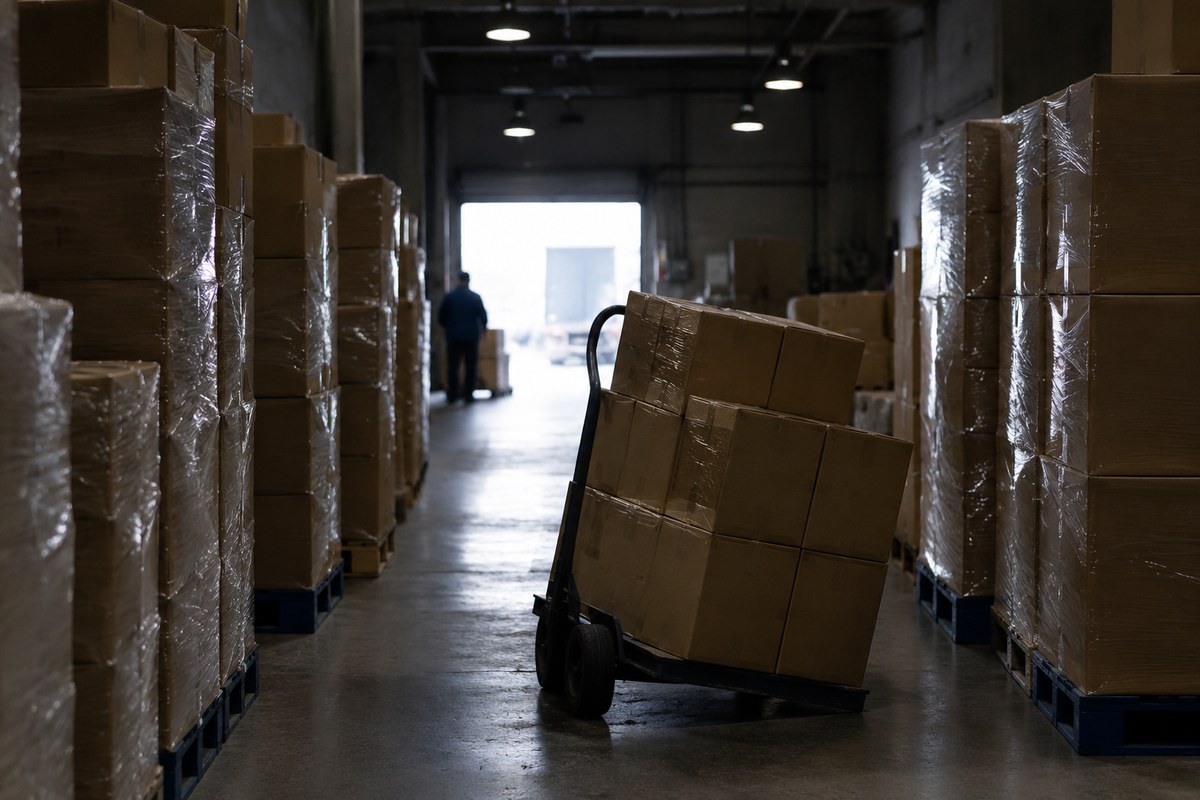
A China consolidation address lets eligible parcels from Taobao, 1688, JD.com, Pinduoduo or Weidian sellers be received and matched to your account before you approve a shipping plan. At CNCartGo, storage is free for the first 100 days from the date a parcel is marked "Received"; days 101–200 cost USD0.10 per parcel per day. The maximum is 200 days in total, after which the parcel is treated as automatically destroyed and cannot be recovered or shipped. Buying-agent purchases have two payment stages: the purchase amount and applicable service charges first, then the measured international shipping quote after warehouse preparation. Parcels you buy yourself use a forwarding workflow; do not assume buying-agent percentage fees apply to them.
This guide walks the full warehouse flow - from the moment a Chinese seller ships your parcel to the day your combined box leaves with a tracking number. Use the steps to track seller delivery, warehouse receipt, preparation, the final quote and carrier handover separately.
What Is a China Consolidation Warehouse?
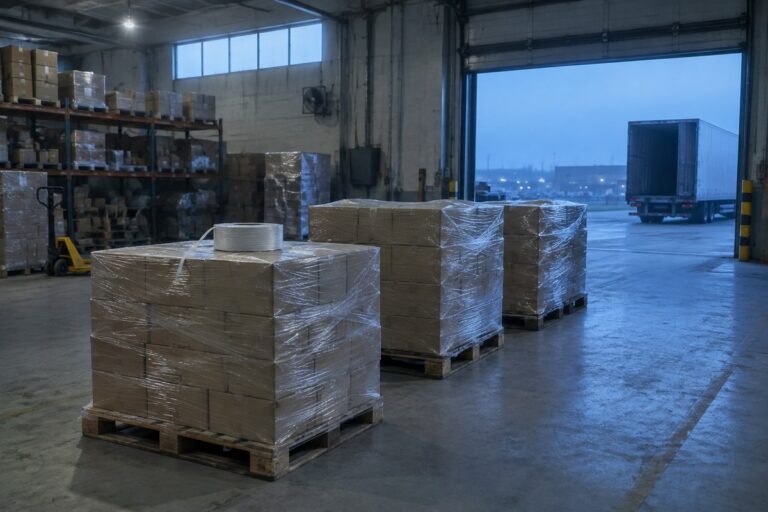
A consolidation warehouse is a single China-based address where you receive purchases from many stores. Instead of every seller shipping internationally, each seller ships domestically to the warehouse. Later, eligible parcels can be repacked together, or kept separate, according to the contents, packing needs and available route.
For orders from stores such as Taobao, Tmall, 1688, JD.com, Pinduoduo and Douyin, confirm that the item and seller delivery are eligible before ordering. Copy the current CNCartGo warehouse receiving details exactly, including any required account identifier; arrival still needs to be matched to your order.
The warehouse supports receiving records, storage, applicable inspection services and eligible consolidation plans. When comparing facilities, check receiving details, storage limits, inspection scope and how the final shipping quote is prepared.
How It Works: Step by Step from Arrival to Dispatch
Use these nine stages to plan a consolidation request; the services and route checks depend on the actual parcels.
- Check item and route eligibility before buying. Use the current CNCartGo receiving details and required account note for seller delivery.
- Sellers deliver domestically. Confirm the seller's shipping charge and dispatch information, and save each domestic tracking number; this stage is separate from international transit.
- The warehouse receives and records the parcel. Check the order's "Received" status and date; seller tracking marked delivered is not international dispatch.
- Parcels are matched to your order, so you see what has arrived and what is still in transit.
- Review the receiving record and available photos. Confirm which inspection or photo services apply and their charges; photos support visible checks, not authenticity or complete functionality.
- You request consolidation. Select the matched, eligible parcels and confirm packing preferences. Approve any packaging removal or reinforcement only after checking the seller's return deadline and evidence requirements.
- Weight and dimensions are measured after preparation. Review the route's chargeable-weight basis, including any volumetric calculation, in the final quote.
- You compare eligible routes and confirm the final quote. Use the shipping calculator for estimates and the Service Fee page for applicable services. Check freight, packing, storage and other quoted charges, then approve and pay the international shipping amount.
- Dispatch with tracking. Payment confirmation is followed by the applicable shipping checks and carrier handover. Save the shipment tracking information and review carrier updates; a shipping request or payment alone is not dispatch confirmation.
Inspection and QC: What Is Free, What Is On Demand
Use receiving records and available photos to compare parcel count and visible packaging condition. Check what the selected inspection service covers, including whether the box is opened and which views are provided; do not assume every parcel includes the same photos or checks.
If you need contents, visible color, labelled size or model, or quantity checked, request the applicable service before packing and confirm its scope and charge. Ask whether any item-specific functional check is available; photos alone cannot establish authenticity, material composition, full functionality or hidden defects.
For clothing, electronics or gifts, identify which differences need review before approving packing. Keep any packaging and evidence required for a return or claim unless you have authorised removal, and do not assume warehouse storage extends the seller's return deadline.
How Consolidation Cuts Costs
Consolidation may reduce repeated packaging or chargeable volume, but it can also change the route, carton size, protection needs and handling. Compare a prepared combined plan with separate shipment quotes using the same destination and service scope. The service fee table concerns the applicable service; do not assume merging parcels recalculates purchase fees or creates one flat dispatch charge.
Depending on the route, the quoted chargeable weight may use actual weight or a volumetric calculation based on the packed dimensions. Ask which formula and rounding apply to the actual quote. Compare the measured combined and separate plans; required protection or an oversized carton can change the result.
For a jacket from one store and shoes from another, record the two parcels and ask for an eligible combined packing plan. Compare it with separate shipment quotes, including freight, packing, any storage charges and quoted exclusions. Approve the plan that meets your protection and delivery needs; there is no guaranteed saving percentage.
Consolidation does not suit every order. A large or fragile item may need a different plan, and restricted goods need item, route and destination review. Combining parcels does not remove customs requirements: keep accurate item descriptions and values and confirm the actual destination's import treatment. If the combined quote or packing plan is unsuitable, compare an eligible separate plan.
Free Storage: Plan Around the 100 Days
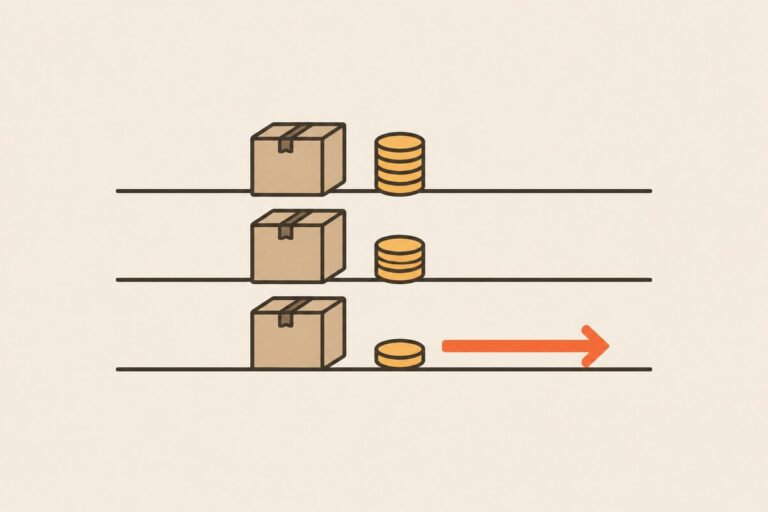
CNCartGo stores each parcel free for the first 100 days from the date it is marked "Received." From day 101 through day 200, storage costs USD0.10 per parcel per day. The total maximum is 200 days; after 200 days, the parcel is treated as automatically destroyed and is no longer available for recovery or shipment.
You can use the storage window to organise eligible orders from different sellers, but record each parcel's own "Received" date. Later arrivals do not reset an earlier parcel's clock, and warehouse storage should not be treated as an extension of seller return or claim deadlines.
Check the order's storage days and deadline, and submit your shipping request before the free period ends. If the plan is still pending as day 101 or the 200-day maximum approaches, contact support to review the status or a partial shipment; do not treat a request or payment as proof of dispatch or assume it stops storage charges.
What Cannot Go in the Same Box
For items such as lithium batteries, power banks, liquids, cosmetics, powders, aerosols, flammable products, food and branded goods, disclose the actual contents before purchase and ask for item, route and destination review. Listing a category here does not establish acceptance; some items may need a separate plan or may not be eligible for transport.
Consolidation does not bypass restrictions. An unresolved item can delay the whole plan, so confirm its eligibility before merging; support review is not a promise that a separate route will accept it.
If an item's eligibility is unclear, ask support before buying or asking the seller to ship. Provide the product link, selected variant, quantity and destination; quantities and mixed contents also need review for the actual plan.
Final Checklist Before Your Parcel Ships
- Every parcel selected for this shipment is received and matched; missing or pending parcels are listed with their own storage and seller deadlines.
- Available photos and receiving records reviewed; any agreed additional checks completed before packing approval.
- Every item and the proposed combination are accepted for the selected route; unresolved restricted-item questions are cleared before approval.
- Packing preferences confirmed, including any authorised box removal or protection; required return or claim evidence retained.
- Destination address and recipient details are correct.
- Item descriptions and values are accurate; actual import requirements and any quoted clearance exclusions are checked.
- Route chosen and final quote confirmed.
- International payment confirmed, remaining shipping checks and storage deadlines reviewed; tracking saved after carrier handover.
Bottom Line
A consolidation warehouse can organise several domestic deliveries before you approve an eligible combined or separate shipping plan. CNCartGo's free storage period is 100 days from "Received," followed by USD0.10 per parcel per day on days 101–200 and a 200-day maximum. Review available evidence, packing preferences, the measured quote and route eligibility; international payment must be confirmed before the remaining checks and carrier handover.
FAQ
How long can parcels stay in the warehouse for free?
The first 100 days are free from the date the parcel is marked "Received." Days 101–200 cost USD0.10 per parcel per day, with a total maximum of 200 days. After 200 days, the parcel is treated as automatically destroyed and cannot be recovered or shipped. Check each parcel's deadline and contact support if a shipping request remains pending.
What is volumetric weight and why does it matter?
Volumetric weight converts packed dimensions into a chargeable-weight measure under the selected route's formula. Ask which weight basis, divisor and rounding apply to your quote. Repacking may change cost, but protection and route limits can also change the result. Use the shipping calculator for estimates.
Can I combine orders from different platforms?
Eligible seller deliveries from different platforms can use the current CNCartGo warehouse receiving details. Keep the required account note and each tracking number. Confirm that parcels are matched, then request a combined or separate plan after reviewing contents, deadlines and route eligibility.
What does consolidation cost?
Confirm the applicable service and packing charges for your actual consolidation request, plus any storage and international freight charges. Buying-agent percentage fees relate to assisted purchases and should not be treated as a consolidation price or automatically applied to parcels you purchased yourself. Check the final measured quote and any exclusions before approving international payment.
What if a parcel arrives damaged or wrong?
Report the issue promptly with the order reference, domestic tracking number and available photos or records. Ask support what additional check or evidence is needed for the reported discrepancy. Photos cannot prove authenticity, full functionality or hidden defects. Preserve any packaging and records needed for a seller return or claim, and check the applicable deadline before waiting or removing them.
Last reviewed: September 5, 2026. Handling fees and shipping checks are revised periodically, so confirm the terms before shipping.
Related guides
Receiving, QC and consolidation each deserve their own look, given in turn below.
- International Shipping From China: Warehouse, Consolidation and Quote Steps
- How Final Shipping Costs Are Calculated After Warehouse Arrival
- Can You Change the Delivery Address After a China Warehouse Packs Your Parcel?
- Before You Pay International Shipping: 7 Address Mistakes to Check at Your China Warehouse
- How to Read Warehouse Photos Before Approving International Shipping From China