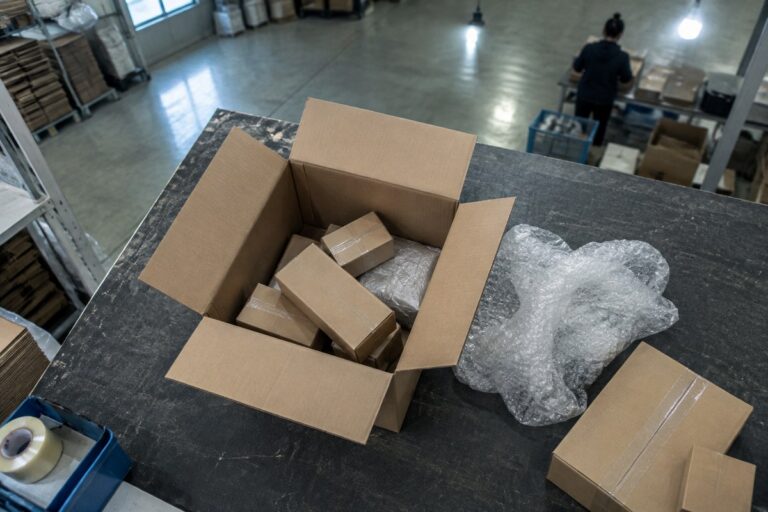
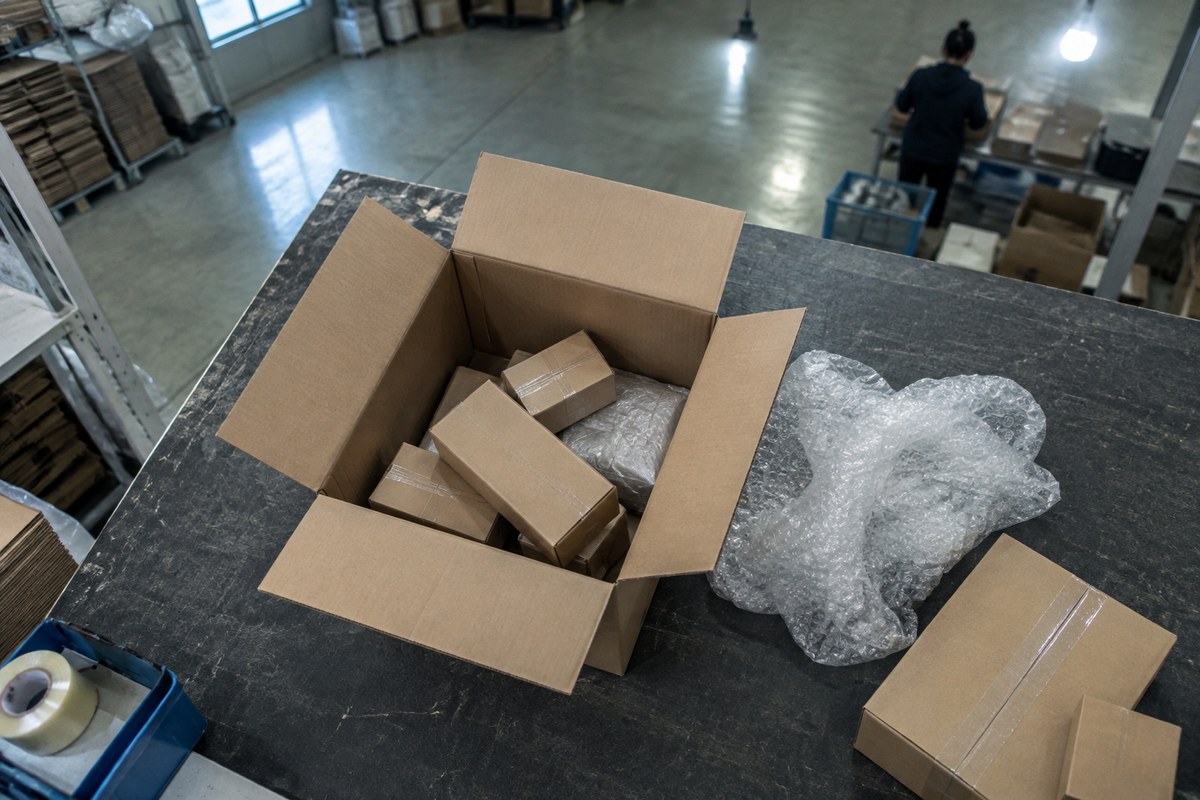
Quick answer: Consolidation combines eligible parcels received at one warehouse into a shipment that you approve. Orders from different sellers can be considered together, but route restrictions, packaging, measurements, storage deadlines and total cost determine whether one box is suitable. Compare the confirmed combined and separate shipping options before deciding; consolidation does not guarantee a saving.
Before choosing a warehouse, check its receiving instructions, storage policy, inspection scope, packaging options and shipping quote process.
What is China warehouse consolidation and how does it work?
Sellers send domestic parcels to the current receiving address assigned to your account. Match each waybill and warehouse receipt to the order, then confirm the contents, packaging instructions and parcels to include. Eligible orders from Taobao, 1688, JD.com, Pinduoduo and Xianyu may be considered for consolidation. One box is not suitable for every mix of goods, and retail packaging should only be removed after your instructions and the protection needed have been confirmed.
Which parcels can I consolidate into one box?
Confirm eligibility for the actual products, packed dimensions, destination and route before combining parcels. Items such as clothing, shoes, books or home goods may be candidates, but the product category or seller platform alone does not establish acceptance. Tell support about batteries, liquids, powders, food, branded goods, fragile items and any other relevant characteristics. Complete any agreed contents checks before repacking, and confirm which original packaging must be kept.
How much money does consolidation actually save?
There is no fixed saving. Consolidation may reduce duplicated packaging or shipping charges, but a larger parcel, protective packaging or handling can offset that benefit. Compare the complete quotes for combined and separate parcels using the applicable actual or volumetric weight. The Service Fee schedule sets the buying-agent fee at 6–15% of product order value; combining parcels does not establish that separate purchase orders will be repriced into a lower fee tier. Use the shipping calculator for estimates and confirm the measured-parcel quote before payment.
When should I NOT consolidate?
Consider separate shipments when a combined box costs more, exceeds a route limit, needs incompatible packing or would delay an item you need sooner. A route may require some goods to travel separately, while other goods may not be accepted at all. Compare waiting costs and storage deadlines if part of the order has not arrived. Confirm the arrangement for remaining goods before approving a partial batch; splitting parcels does not guarantee a lower import charge or less customs scrutiny.
How long do parcels stay in the warehouse for free?
Storage is free for the first 100 days from the date the parcel is marked "Received". From day 101 through day 200, storage costs USD 0.10 per parcel per day. The maximum storage period is 200 days; after 200 days, the parcel is treated as automatically destroyed and cannot be recovered or shipped. Check each parcel's Received date and deadline in your account and review the warehouse storage policy. A consolidation or shipping request is not a dispatch confirmation; contact support if the shipment is still pending as a deadline approaches.
How is volumetric weight calculated?
Volumetric weight reflects the space a packed parcel occupies. A route may calculate it from length × width × height using its specified units, divisor and rounding rules, then compare it with actual weight. Use the selected route's current calculation rather than assuming one divisor applies everywhere. Removing unnecessary retail packaging may reduce volume, but retain the protection the contents need. Confirm the final parcel's packed weight, outer dimensions and chargeable weight for the quote.
What happens to parcels that arrive after I request consolidation?
Ask support whether a newly received parcel can still be added to the consolidation request at its current stage, and whether changing the plan requires more handling, time or cost. Do not assume additions are possible until dispatch. If a second batch is needed, confirm its contents, route and charges. Check storage deadlines for the goods already waiting and keep the remaining seller waybills under review.
Can batteries, liquids and branded goods be consolidated?
Consolidation does not bypass carrier or destination requirements. Describe the actual product and provide relevant details such as battery specifications, liquid contents, packaging or brand information before the seller sends it to the warehouse. Support must review the available route and any required documents or packing. Separate dispatch or a dedicated route is not guaranteed to make an otherwise unacceptable item shippable; prohibited goods must not be sent.
How long does delivery take after consolidation?
Delivery estimates depend on the route, carrier, destination and actual parcel. Warehouse checks and preparation happen before transit, so ask whether a quoted time covers handling or only carrier transport. For buying-agent orders, first pay for the products, domestic seller-to-warehouse delivery and the 6–15% service fee on product order value. After warehouse receipt, measurements and route confirmation, pay the separate international shipping charge before dispatch, following the payment policy. Payment or a created tracking label does not itself prove carrier handover; check the dispatch and carrier updates.
What should I double-check before confirming consolidation?
Run this checklist before confirming a merge:
- Expected waybills, warehouse receipts and confirmed contents matched; any goods left behind have an agreed plan.
- Available photos reviewed and any additional inspection scope, timing and charges confirmed.
- Product characteristics disclosed and route eligibility confirmed for the proposed combination.
- Instructions agreed for original packaging, protective materials and any repacking charges.
- Final international recipient, address and contact details checked for this shipment.
- Buying-agent service fee and purchase payment distinguished from the later international freight payment.
- Combined and separate options compared, storage deadlines checked and final quote confirmed before paying.
Bottom line
Consolidation is a choice to review after the warehouse receives and identifies the parcels. Compare eligible routes, confirmed contents, protective packaging and the measured shipping quotes. Check each parcel's storage deadline and agree how any goods left behind will be handled. Approve the plan and required payments before dispatch; neither consolidation nor payment alone confirms that the parcel has shipped.
FAQ
Where do I find the warehouse address and recipient details?
Use the current warehouse address and receiving details assigned in your CNCartGo account or order. Check the warehouse address guide and ask support if the instructions are missing or unclear. Avoid relying on an old screenshot; the Chinese warehouse recipient is separate from the final international delivery recipient.
Are QC photos free?
Check which receiving records and photographs are included in your order and whether extra photos, opening, measurements or a specific inspection will incur a charge. Describe the exact check you need and confirm its scope before repacking. A photograph can show visible condition, but it does not prove authenticity, full functionality or the absence of hidden defects.
Can small sellers use consolidation too?
Small sellers can ask for consolidation, but should confirm that the proposed products, quantities and packaging fit the receiving and shipping services available. Match the expected stock and variants to the confirmed contents, and discuss any inspection or packing requirements before approving shipment. Commercial quantity, destination requirements and route limits may affect the plan; do not assume it is identical to a personal parcel.
What if a parcel arrives damaged or incomplete?
Report damage or a suspected shortage before repacking or approving dispatch. Provide the order, waybill, available photos and the expected items or quantities, and ask which further checks can establish the discrepancy. Keep the original packaging while support reviews the next steps. Check seller return deadlines separately from warehouse storage limits; reporting a problem does not guarantee a refund or replacement.
Can I change or cancel a consolidation request?
Ask support to check the current request status before adding or removing a parcel or changing packing instructions. Feasibility, time and charges can depend on work already completed; being undelivered does not guarantee the request can be changed. After carrier handover, any available delivery change is subject to the carrier and route rather than a warehouse consolidation edit.
Last reviewed: September 5, 2026. Consolidation fees, storage limits and carrier rules are adjusted; confirm the terms before combining parcels.
Related guides
The ten questions cover the basics, and each stage is taken further below.
- 12 China Warehouse Questions Every First-Time Overseas Buyer Asks (Answered for 2026)
- Shipping From China: Questions Before Dispatch
- Package Consolidation From China: Buyer Questions
- China Warehouse Shipping and Parcel Consolidation: How It Works
- China Warehouse to UK Shipping: Duties, Consolidation & Delivery Checklist (2026)