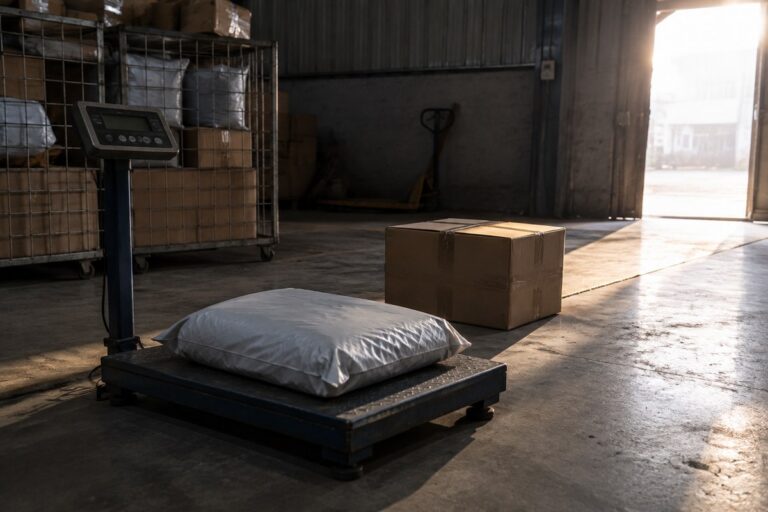
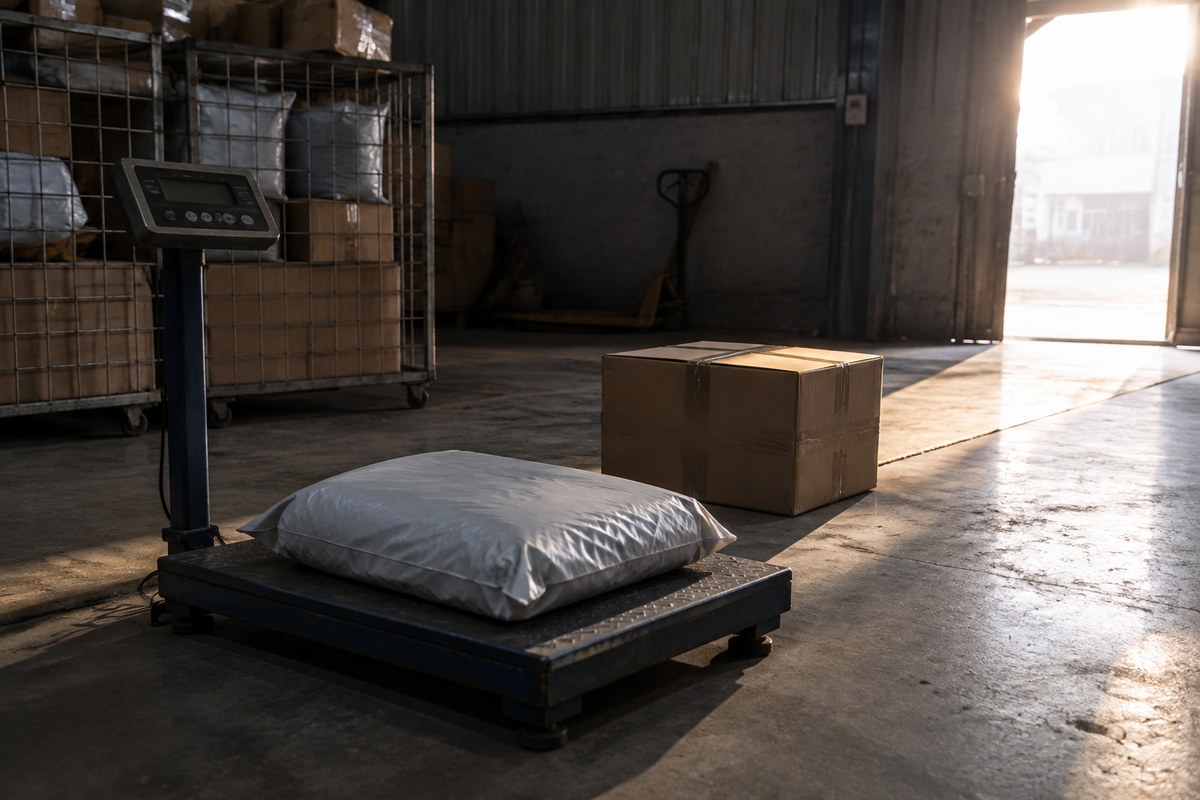
Quick answer: shipping cost from China can change after warehouse receiving or repacking because billable weight is the greater of actual weight and volume weight, and packed dimensions are only known once the goods arrive. Bulky, light items move to volume weight, so the safest first step is to have the warehouse measure and photograph the packed parcel before you approve a route.
採取行動前需要檢查的內容
| Check | Why it matters |
|---|---|
| Actual weight | The scale weight is important, but it is not always the billable weight for international shipping. |
| Volume weight | Large but light parcels can cost more because carriers charge by space as well as kilograms. |
| Consolidation | Several small parcels may be cheaper when combined, but repacking must protect the goods and preserve documents. |
| Route restrictions | Batteries, liquids, powders, cosmetics, food, fragile goods, branded items, and oversized packages may need special review. |
Those four checks exist because billable weight is settled at the warehouse, not on the listing page. A supplier page can state 1.2 kg and still ship as 6 kg once the item is boxed with padding and air; the seller has no reason to know how you will pack it or which lane you will book. Everything below is about closing that gap before you approve a route.
建議的 CNCartGo 工作流程
Cost questions are where the order matters most: quote, buy, receive, measure, then pick the lane. Reviewing the parcel before purchase lets CNCartGo flag items whose packaging makes volume weight dominant - inflatable furniture, lamp housings, long textile rolls, rigid oversized boxes - and tell you in advance whether a smaller carton or a denser packing method is realistic.
CNCartGo can check item size, packaging, consolidation options, route limits, and destination-country risks before the buyer commits to shipping.
- Copy the live product URL instead of sending only a translated product name.
- Confirm option text, color, size, model, quantity, and seller notes.
- Send the destination country and any timing, packaging, or inspection requirement.
- Wait for item, payment, warehouse, and shipping checks before paying or asking the seller to ship.
- Use warehouse photos, consolidation, repacking, and route review before international dispatch when needed.
決策表
| 情況 | 最佳行動 | 為什麼 |
|---|---|---|
| The live link is fixed and the carton dimensions are already known | Estimate cost, then request manual review for risky parcels | A clear link plus packed size and destination is enough for a first estimate; only the warehouse measurement settles the final figure. |
| A payment or account block holds the order before the carton is packed | Stop retrying the card and have the order placed through a reviewed route before packing | A blocked payment stops the order before packing, so no packed size or billable weight exists and no lane can be quoted yet. |
| The carton is large but light, or the goods are fragile, battery-powered, liquid, cosmetic, food, branded or restricted | Ask for a volume weight check on the packed carton before paying | Bulky light cartons bill on volume weight rather than scale weight: on most air express lanes the divided-by-6000 figure outweighs the actual kilos. |
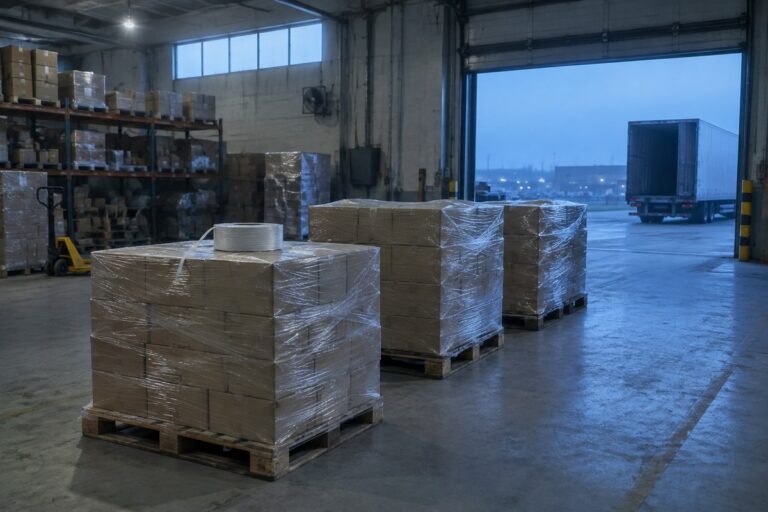
| Several sellers or several parcels each carry their own volume weight | Combine billable weight through warehouse receiving and consolidation | Consolidated parcels share one volume-weight calculation, and repacking can lower the billable figure before the lane and route are chosen. |
Volume weight examples: how the billable figure is reached
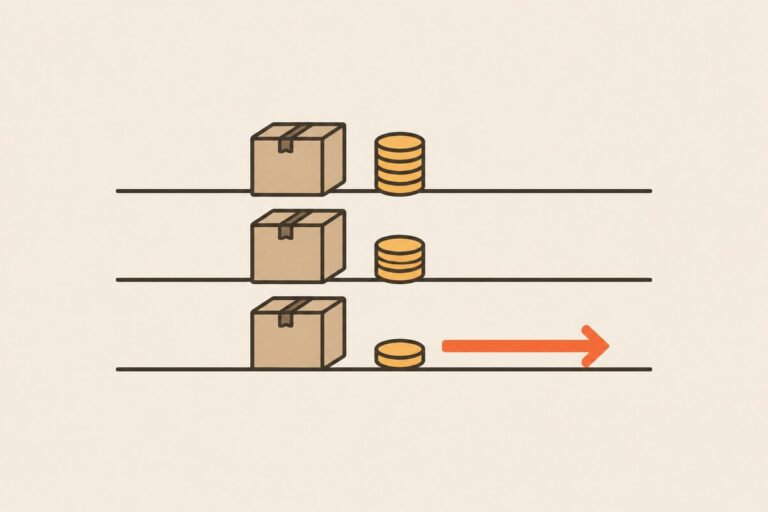
Volume weight turns carton size into kilograms. The formula is length × width × height in centimetres, divided by the divisor the carrier applies, and the result is set against the scale weight; the higher of the two is what you pay for.
| Packed carton (cm) | Volume (cm³) | Volume weight ÷ 6000 | Volume weight ÷ 5000 | Actual weight | Billable weight |
|---|---|---|---|---|---|
| 40 × 30 × 20 | 24,000 | 4.0 kg | 4.8 kg | 2.0 kg | Volume decides: 4.0 kg on a ÷6000 lane, 4.8 kg on a ÷5000 lane |
| 50 × 40 × 30 | 60,000 | 10.0 kg | 12.0 kg | 8.0 kg | Volume decides: 10.0 kg on a ÷6000 lane, 12.0 kg on a ÷5000 lane |
| 30 × 20 × 15 | 9,000 | 1.5 kg | 1.8 kg | 12.0 kg | Actual weight decides: 12.0 kg on either lane |
The divisor is the part buyers miss. Air express and most air freight lanes use 6000; several air-economy services and some heavier cargo lanes use 5000. A smaller divisor produces a larger volume weight, so the same 50 × 40 × 30 carton above is billed at 10 kg on one lane and 12 kg on another even though nothing about the parcel changed. Ask which divisor your route applies, and whether the carrier measures the outside of the carton including bulges, before you approve the shipment.
That divisor, plus the ratio between the two weights, is the whole difference between light bulky cargo and dense cargo. In the first two rows the parcel occupies more space than it weighs, so trimming the carton cuts the bill directly: moving the same 50 × 40 × 30 goods into a 50 × 40 × 20 carton removes 20,000 cm³, which is about 3.3 kg of volume weight at ÷6000, without the scale weight changing at all. In the third row the goods are dense, the scale weight is already above the volume weight, and a smaller box saves nothing on the per-kilo rate - there the gain comes from a lane that accepts the weight and from declaring the item correctly.
This is why CNCartGo quotes after the warehouse measures and photographs the packed parcel instead of working from a listing weight. If you are choosing between a small dense item and a large light one, send both links with approximate dimensions and the destination, and ask for the billable weight on each available lane before you decide.
避免的常見錯誤
- Estimating freight from product listing weight instead of warehouse-measured parcel data.
- Ignoring carton size and assuming only kilograms decide the shipping bill.
- Consolidating every parcel without checking fragile items, original packaging needs, or customs paperwork.
- Comparing only the cheapest route and ignoring delivery stability, tracking, insurance, and destination restrictions.
The pattern to avoid is paying first and learning the packed size afterwards. A buyer who settles the seller price and then discovers the billable weight is 12 kg rather than 8 kg has no room left to renegotiate, because the goods are already sitting in the warehouse. Ask for the measured numbers - length, width, height, scale weight and the divisor your lane applies - before the international leg is booked.
Send the shipping question as a shipping question. If you are weighing two products against each other, or unsure whether a carton can be trimmed, include both links, approximate dimensions and the destination country, and ask for the billable weight on each lane that serves it. A quote built on measured parcel data supports a real decision; one built on listing weights does not.
常見問題
Why is volume weight important?
Carriers charge for space on the aircraft or truck. A light but large box can be billed higher than its scale weight.
Can a calculator give the final cost?
A calculator is useful for planning, but warehouse measurement and route review are needed for final confirmation.
合併總是能省錢嗎?
Not always. It often helps with compatible small parcels, but fragile, oversized, or restricted goods may need different handling.
What should I provide for a shipping quote?
發送產品連結,預估數量,目的地國家/地區以及任何已知的尺寸或包裝詳情.
CNCartGo 可以重新包裝包裹嗎?符合條件的包裹可以進行檢查和重新包裝,前提是這樣做可以降低風險或減少體積,且不會損壞貨物.
上次審核時間:9 月 5,2026.運費和體積重量規則隨市場波動;請在預算前確認即時數據.
相關指引
Worked examples help, and the surrounding cost factors are layered in below.