US-bound freight is quoted from volumetric weight, so measure the packed carton and compare its dimensions with the product page before asking for a rate. The $800 de minimis exemption ended for all countries on 29 August 2025, so plan for duty on the declared value as well as the 6–15% service fee and the freight itself.
Fast checklist before taking action
| Information | Why it matters | Best next step |
|---|---|---|
| Exact product link | The listing gives product dimensions and net weight; the packed carton that gets billed is a different figure. | Send the listing so the packed carton can be measured for the quote. |
| Option, size and quantity that set the packed carton | Option and size choices change the packed carton, and the packed carton is what the volume weight and the quote are built on. | Copy the option text so the carton dimensions can be worked out. |
| Destination country | The volumetric divisor and the applicable rate are lane-specific, so the US ZIP code belongs in the measurement. | The divisor and the rate table are lane-specific, so send the US city and state rather than the country on its own. |
| Payment or checkout status | Payment failed, waiting for payment and card declined do not change an unmeasured carton. | Do not keep re-attempting the payment while the carton is unmeasured; let CNCartGo settle the order so the quote uses the real dimensions. |
| Item risk | Light but bulky loads such as furniture, foam or garment bags bill on the carton, not on the listed kilos. | Ask for a manual measurement check on bulky items before purchase. |
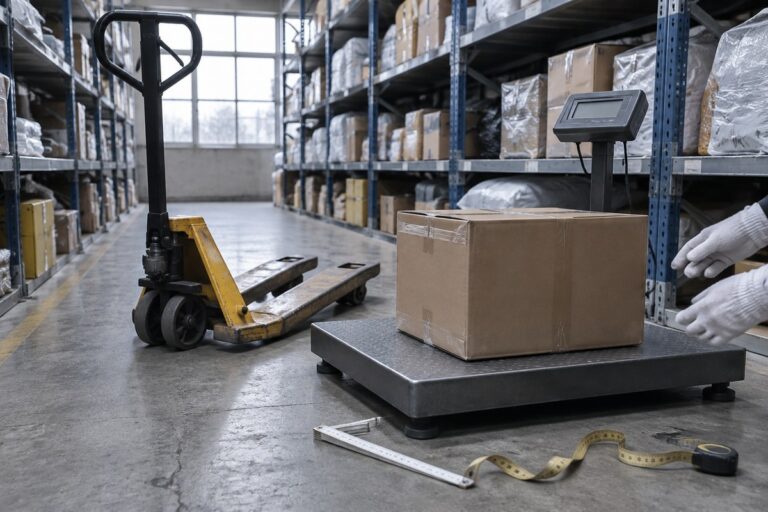
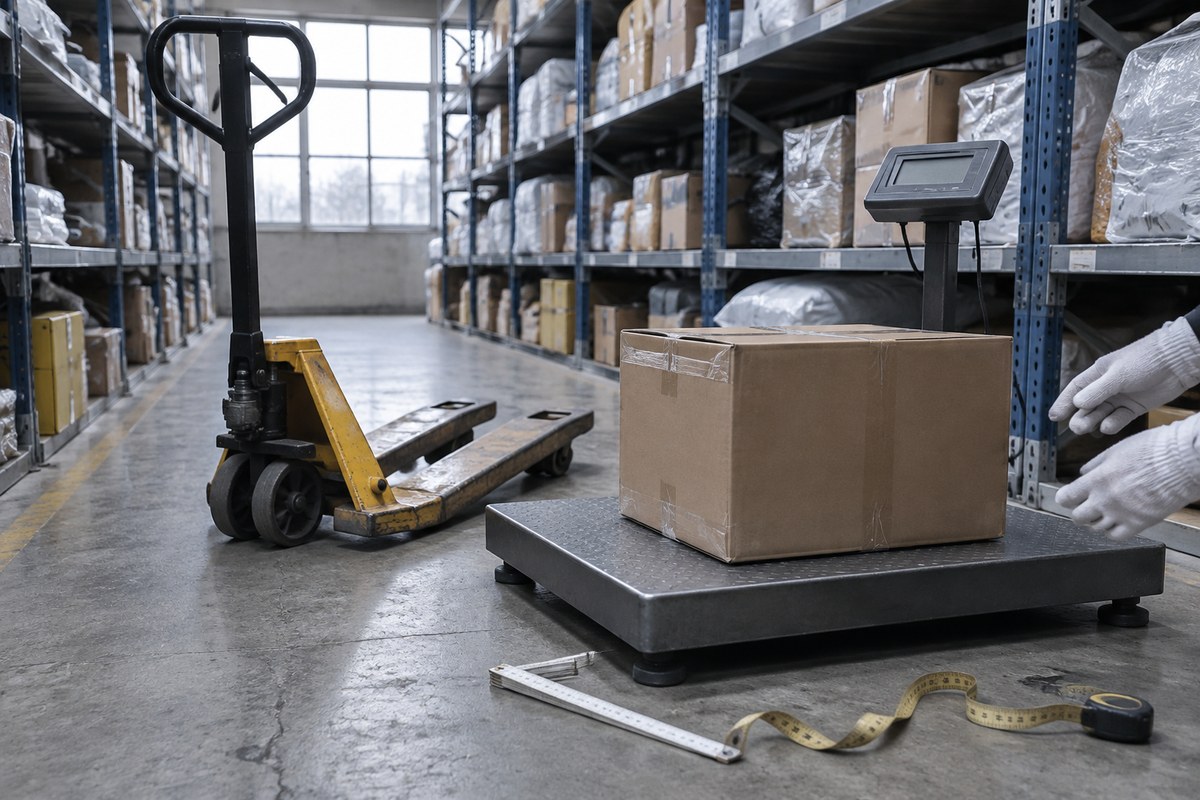
Run this checklist before you ask for a US rate, because volumetric billing is decided by the carton and not by the product page. A lamp that the listing calls 8 kg can bill as 10 kg once it is boxed, and no screenshot of the page shows that. Measure the sealed outer carton, write down length × width × height in centimetres, weigh the parcel if you have a scale, and keep the destination ZIP code next to those numbers: that is the minimum a US-bound quote needs.
CNCartGo's advantage here is pricing the parcel you actually have. Send the live product link together with the packed dimensions and the weight, and the volumetric figure can be worked out before the goods are bought instead of after a counter clerk in the United States presents a billable weight that is heavier than anything the listing mentioned.
How CNCartGo handles the workflow
For US-bound orders the sequence is quote, purchase, receiving, then shipping approval. The quote stage is where volume weight belongs, because the carton can still be repacked at that point, the divisor in force for the chosen carrier can still be confirmed, and the gap between the weight printed on a listing and the weight the warehouse scale reads can be settled while the goods are still with the seller.
With the carton dimensions, the actual weight and the ZIP code on hand, the team can convert centimetre volume into billable kilograms, test whether a smaller repack would bring the figure down towards the real weight, check that the service level still fits the deadline, and flag anything that needs a manual decision first, such as lithium cells, liquids, magnets or oversized packing.
Payment is a separate question from freight on a US-bound order, and it is worth settling before the parcel reaches the warehouse. International cards are frequently declined by Chinese marketplace checkout pages, so an order placed by an agent and paid in RMB inside China removes that variable; what then has to be right is the option, the quantity and the delivery details, not a card that a foreign bank keeps blocking.
Volume weight is the largest single source of US freight surprises. Carriers billing US routes take the greater of the scale weight and the carton measured in centimetres divided by 6000, so a light bulky item pays for the space it takes rather than for its mass. Duty on the declared value belongs in the same calculation, since the US $800 de minimis exemption ended on 29 August 2025, and the 6–15% service fee sits on top of both.
Common failure points
- Quoting from the listing weight instead of the packed carton dimensions.
- Assuming the volumetric divisor is always 6000 without confirming the rule for the chosen route.
- Letting loose padding inflate the carton until the volumetric figure exceeds the real weight.
- Treating freight as the whole landed cost and forgetting duty on the declared value.
- Splitting an order to stay under a duty threshold that no longer exists for US imports.
The mistake that costs US buyers the most is quoting from the product page. Sellers normally list the item weight, occasionally the retail box, and almost never the outer carton with padding and tape. That gap is exactly what gets billed, which is why two buyers ordering the same chair can pay different freight: one sends the packed dimensions and gets a repack recommendation, the other lets the warehouse ship the carton as it arrived.
Volume Weight Examples Before You Ask for a Quote
Two parcels explain almost every surprise on US-bound freight: one is bulky and light, the other is small and heavy. In both cases the carrier bills the greater of the actual weight and the volume weight, and the volume weight is the carton's length × width × height in centimetres divided by 6000.
Example 1 - a bulky carton billed on volume weight. A lamp arrives packed as 50 × 40 × 30 cm, sealed and repadded, and the warehouse scale reads 8.0 kg. Volume: 50 × 40 × 30 = 60,000 cm³. Volume weight: 60,000 ÷ 6000 = 10.0 kg. Because 10.0 kg is greater than the 8.0 kg actual weight, the parcel is quoted and billed on 10.0 kg - the buyer pays for roughly two kilograms of air. Repacking the same goods into 45 × 35 × 25 cm (39,375 cm³ → 6.6 kg volume weight) drops the billable figure to the actual 8.0 kg, which is why the packed dimensions are worth asking for before approving a rate.
Example 2 - a dense carton billed on actual weight. A second parcel on the same route: a box of hand tools measuring 30 × 25 × 20 cm, weighing 7.0 kg on the scale. Volume: 30 × 25 × 20 = 15,000 cm³. Volume weight: 15,000 ÷ 6000 = 2.5 kg. Here the actual 7.0 kg is greater, so the chargeable weight is 7.0 kg and the compact packing costs nothing extra. Two parcels of identical dimensions can produce different bills purely because of what is inside them.
Before requesting a quote, measure the packed outer carton rather than the product box, weigh it if you can, and send both numbers together with the destination ZIP code. Heavier or bulkier packing can also push a parcel onto a different service level, and since 29 August 2025 the US $800 de minimis exemption has ended, so duty on the declared value applies on top of freight and the 6–15% service fee. Where a route publishes a divisor other than 6000, confirm the divisor in force for that carrier before you treat any calculation as final.
What to send for a faster answer
For a US quote, send the product URL, the selected option and quantity, the packed carton dimensions, the actual weight if you have it, the destination ZIP code and any payment error you saw at checkout. Mention batteries, liquids, magnets, aerosols, branded goods or unusually large packing in the first message, because those categories change both the route and the way the parcel is prepared.
FAQ
What should buyers check for shipping from China to USA volume weight?
Check the packed carton rather than the product page. Length × width × height in centimetres divided by 6000 gives the volumetric kilograms, and the carrier bills whichever figure is higher, the volumetric one or the scale weight. When the volumetric figure wins by a wide margin, ask about repacking before approving a rate.
When should I use a CNCartGo quote?
Ask for a quote when the carton is bulky relative to its weight, when the seller ships only inside China, or when the listing gives no dependable packing size. Settling the dimensions before purchase is cheaper and faster than requesting a repack after a rate has already been quoted and approved.
Can CNCartGo help with multiple sellers?
Yes. Parcels from several sellers can be received at the Guangzhou warehouse, checked against their intake photos, and combined into one US-bound carton. Consolidation usually reduces billable weight as well as cost, because two small boxes with generous padding tend to measure more together than one tightly packed carton holding the same goods.
Is a calculator enough for final shipping cost?
A calculator is a reasonable starting estimate, but it cannot see your padding. Oversized or fragile packing, batteries, liquids and branded goods are the cases where a measured carton and a manual review replace the estimate entirely.
Last reviewed: September 5, 2026. Carrier billing methods and dimensional divisors are updated; confirm the rule in force before approving a rate.
Related guides
Volume weight explains many surprise quotes, and the topic is taken further below.
- Cross-Border Logistics Cost from China: Volume Weight Examples for Buyers
- Cross-Border Logistics Cost From China: What Changes the Final Quote
- Before You Pay International Shipping: 7 Address Mistakes to Check at Your China Warehouse
- International Shipping From China: Warehouse, Consolidation and Quote Steps
- China Warehouse Consolidation Quote: What Photos, Weight and Seller Links Change