Quick answer: Consolidation is approved parcel by parcel, not order by order. The China warehouse needs the live product links, the tracking numbers it has actually received, and photographs before it can say what a combined carton will really weigh. Merging usually costs less than several small shipments, but not when volumetric weight, restricted items or fragile handling push the combined parcel onto a different service.
Fast checklist before taking action
| Information | Why it matters | Best next step |
|---|---|---|
| Exact product link | Every parcel keeps its own live seller link, so the arrival photo and measured weight stay traceable to that URL. | Send the seller URL for each parcel so the arrival photo and measured weight stay on that link. |
| Option text, carton size and quantity per parcel | Variant text that does not match the parcel makes the arrival photo impossible to reconcile. | Paste the option text exactly as it appears on that parcel's seller page. |
| Destination country | The merged carton is re-quoted for the destination, because route and rate follow the new dimensions and weight. | Give the city and country the combined carton will finally be sent to. |
| Payment or checkout status | Payment failed, waiting for payment and a declined card each leave one parcel unbookable for consolidation. | Settle the payment status first, because consolidation cannot be booked around an unpaid parcel. |
| Item risk | Fragile, battery, branded or oversized pieces decide what may be merged and how the combined carton is packed. | Ask for a manual merge check on the combined carton before it is booked. |
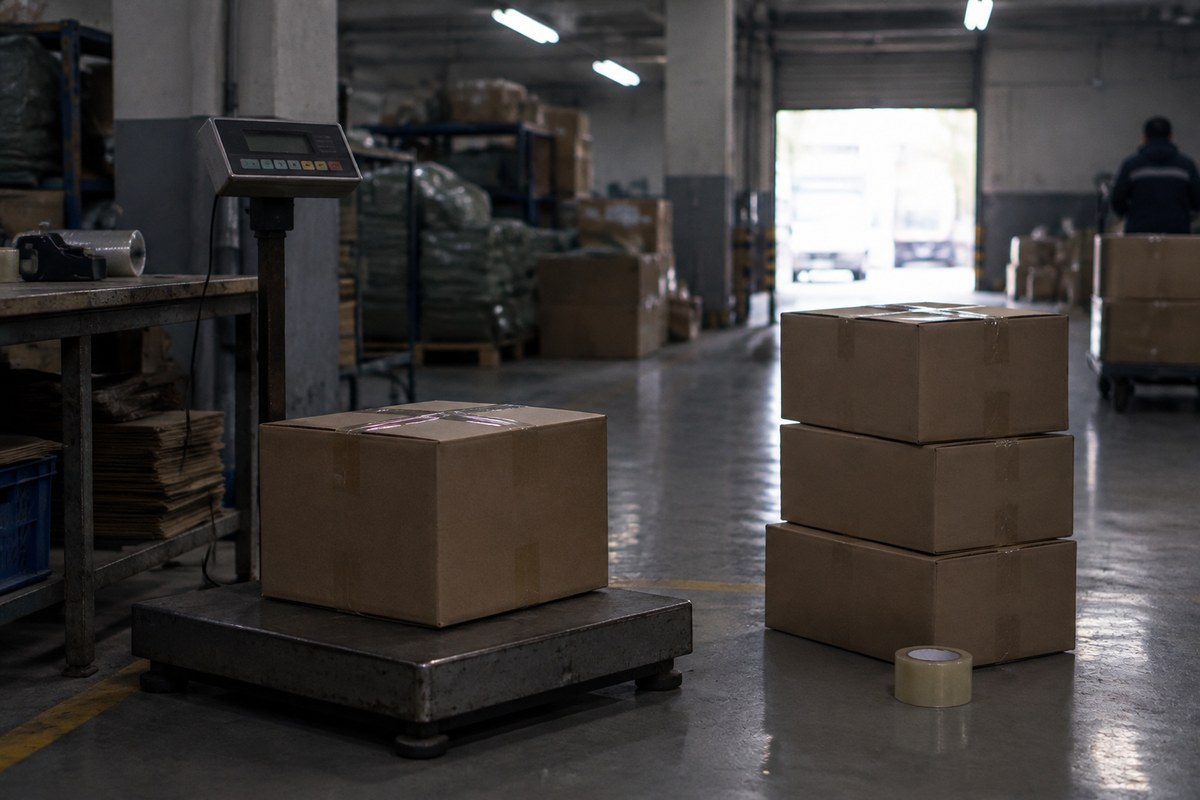
Consolidation goes wrong when the request arrives before the parcels do. Before asking the warehouse to merge anything, confirm that every tracking number has actually been received, that each item can be matched to the seller link it came from, and that the arrival photos have been taken. A carton that is already taped and measured can be quoted; a parcel still moving inside China cannot be added to it.
CNCartGo's advantage at this stage is that nothing is merged on trust. The buyer sends the seller links, the warehouse confirms what physically arrived, and the combined quote is built from a carton that has been weighed and photographed rather than from the sum of several listing pages. One wrong size or a missing accessory is far easier to spot before the box is sealed than after it leaves China.
How CNCartGo handles the workflow
Consolidation sits third in the sequence: quote, purchase, receiving, then international shipping. It only works in that order because the decision to merge depends on facts that exist after receiving, such as how many parcels actually showed up, what each one weighs, how much empty space the sellers left inside, and whether the combined dimensions push the shipment onto a different service level.
Given live seller links, the tracking numbers already received and the arrival photo set, the team can identify each parcel, weigh and measure the cartons, and compare what the merged shipment would cost against sending the parcels separately. If one item in the group is oversized, fragile or restricted, that is resolved before the merge rather than after the box is closed and labelled.
Payment trouble and consolidation trouble are often confused because both show up as a stalled order. They are unrelated: a declined card or a checkout error stops a purchase, while a consolidation question concerns parcels that have already arrived at the warehouse. Clear the payment side first, since an order paid in RMB by an agent removes the card question, and the merge decision can then rest on weights and photographs.
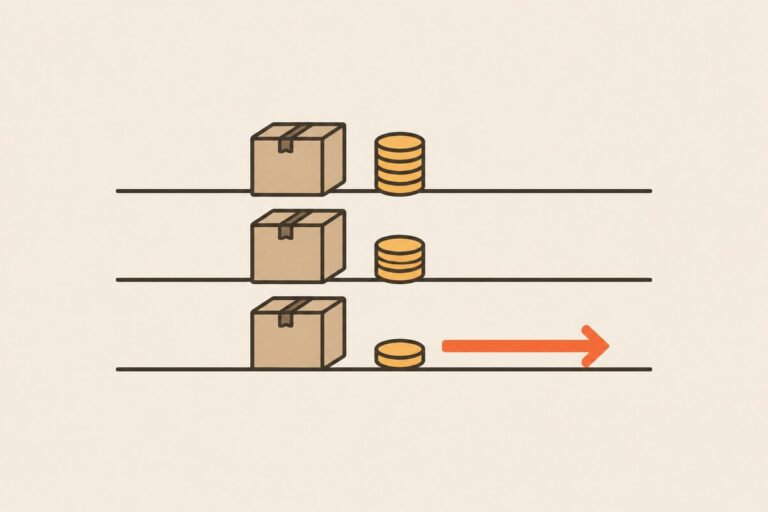
On a consolidated parcel the freight is driven by the combined carton. Two light boxes with loose padding can measure more than one tight carton holding the same goods, and carriers bill the greater of the actual weight and the volumetric figure. The practical lever is packing: smaller outer dimensions, less trapped air, and still enough padding to protect what is inside. That is why packed dimensions matter more than the number of items.
Common failure points
- Approving a merge before every parcel has been received and photographed.
- Keeping one photo per item instead of the arrival, label, opened-carton and contents sequence.
- Merging goods that cannot be traced back to their own seller link and tracking number.
- Assuming a combined carton will weigh the sum of the weights shown on the listing pages.
- Requesting consolidation without saying which items are fragile, restricted or time-critical.
The recurring mistake in consolidation is approving the merge too early. Buyers who combine while one parcel is still in transit give up the choice entirely: a parcel that arrives after the carton has shipped cannot be added, and it then travels as a second shipment at full rate. The other common slip is keeping one photo per item when a merge needs a sequence: arrival, label, carton opened, contents, accessories.
What the Warehouse Photos, Weight Readings and Seller Links Must Show
A consolidation quote is only as good as the three records that come out of receiving: the arriving-parcel photos, the weight and dimensions taken at the warehouse, and the link that ties each item back to the order it came from. Ask for all three before anything is merged, and read them yourself instead of accepting one thumbnail.
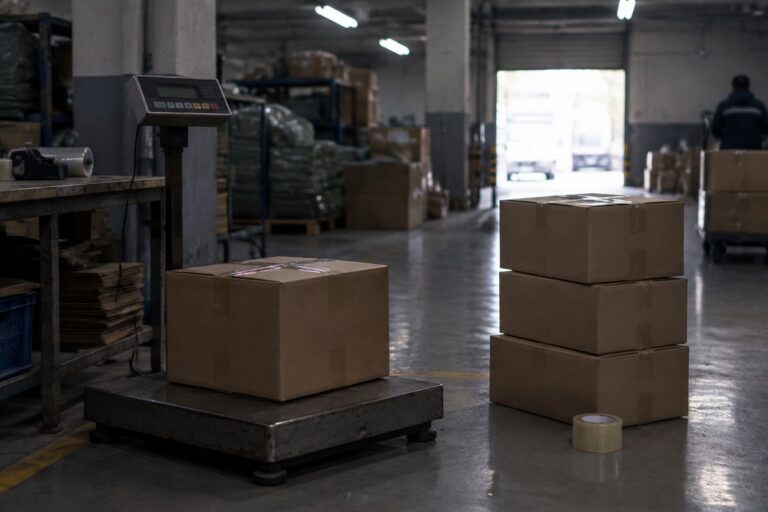
What the arrival photos should show. A usable set has five frames: the sealed outer carton as delivered, the shipping label with the domestic tracking number readable, the carton opened with the seller's inner packaging and padding still in place, the product labels laid out (brand, model, capacity, serial or IMEI where present), and the accessories and manual counted next to the item. A tape measure or ruler visible in the frame is worth more than any caption, because without it nobody can tell later whether the carton was 40 cm or 60 cm long. Receiving, photographing and basic inspection are already covered by the 6–15% service fee, so this is a record to request, not a paid extra.
How actual weight and volume weight change the freight. Carriers bill the greater of the two figures. Actual weight is what the sealed parcel reads on the warehouse scale; volume weight turns the space it occupies into a billable kilogram figure, normally length × width × height in centimetres divided by 6000 for US-bound routes. Worked case: a carton measuring 40 × 30 × 20 cm that the scale reads at 2.0 kg. The volume is 24,000 cm³, which divided by 6000 gives 4.0 kg volume weight. Because 4.0 kg is higher than the 2.0 kg actual weight, the parcel is billed on 4.0 kg, not 2.0 kg. The same 2 kg of goods packed into 30 × 20 × 15 cm (9,000 cm³ → 1.5 kg volume weight) is billed on the actual 2.0 kg instead. That single difference is why "pack it as small as the goods allow" is often the cheapest instruction a buyer can give, and why a quote taken before the carton is measured and weighed can still move.
Linking seller links, tracking numbers and parcels. Every parcel in the warehouse should be traceable to one live product URL and one set of chosen options. The routine that works: keep one row per item with the seller link, order number, option text and quantity; add the domestic tracking number as soon as the seller ships; then match that tracking number to the receiving record; and finally to the parcel ID used in the consolidation. When several orders from different sellers are merged into one carton, the photo set and packing list must still let you tell which item came from which link - otherwise a wrong size or a missing accessory surfaces only after the combined parcel has left China.
What to send for a faster answer
Send the seller links and option text for every item in the group, the domestic tracking numbers you expect, and the destination country. Say which parcels have already arrived and which are still moving, and flag fragile, oversized, branded or battery-containing items. If you want a particular packing arrangement, one carton or several smaller ones, describe it in the first message so the warehouse can weigh the options.
- China Warehouse Consolidation
- Parcel Forwarding From China
- our shipping calculator
- Shipping From China To Us
Can CNCartGo help with multiple sellers?
Yes. Parcels arriving from different sellers can be received, inspected against the photo set, and consolidated into a single shipment, as long as each one can be traced back to its own live product link and order record.
Is a calculator enough for final shipping cost?
A calculator can price a carton you have already measured. It cannot guess what three unopened parcels from different sellers will weigh once they are combined, which is why a consolidation figure is confirmed on the warehouse scale rather than from the listing pages.
Related guides
Photos, weight and seller links decide the quote, and each is examined further.
- International Shipping From China: Warehouse, Consolidation and Quote Steps
- Can You Change the Shipping Method After a Parcel Arrives at a China Warehouse?
- Can You Change the Delivery Address After a China Warehouse Packs Your Parcel?
- How to Read Warehouse Photos Before Approving International Shipping From China
- Pinduoduo for Overseas Buyers in 2026: Low Prices, Seller Risk, Warehouse Photos, and Forwarding