Battery shipments from China need manual classification before purchase or warehouse release: state whether the cell is installed in the equipment, packed with it, or shipped alone, and give the chemistry, capacity or watt-hour figure. Packaging, quantity and destination then decide the route, and eligibility cannot be confirmed from a generic product name.
Last verified: September 2026. Battery classifications, watt-hour limits and carrier acceptance rules are revised without much notice, so confirm the current requirement for the exact cell, packaging and destination lane before dispatch.
Battery details needed before route selection
- Classify the battery as installed, packed with equipment or standalone.
- Provide chemistry, capacity or watt-hour details and the exact product link.
- Confirm packaging, quantity, destination and available carrier route before release.
Request a battery shipping manual review. Include the product URL, selected option, quantity, destination and any relevant screenshot.
Fast checklist before taking action
| Information | Why it matters | Best next step |
|---|---|---|
| Exact product link | A live battery listing carries the watt-hour rating and the UN 38.3 test summary; a general product name carries neither. | Send the battery listing so the Wh figure and UN 38.3 summary can be read. |
| Cell variant, watt-hour figure and pack size as listed | A wrong cell variant or watt-hour figure changes how the battery is classified. | Copy the option text so the watt-hour rating is not misread. |
| Destination country | Air lanes cap lithium watt-hours by country, while sea and rail routes apply their own limits. | Name the destination city before any lithium lane is quoted. |
| Payment or checkout status | Payment failed, waiting for payment and card declined delay a battery order that still needs lane approval. | If the charge keeps failing, hand the battery order to an agent. |
| Item risk | Loose 18650 cells, power banks above 100 Wh and damaged packs all fall under the strictest handling rule. | Ask for a manual lithium check before the pack is purchased. |
Battery paperwork is easier to fix on a desk than in a warehouse queue. Before the seller is paid, capture the label photo, the watt-hour figure, and whether the cell sits inside the device, in the same carton as the device, or on its own - each answer points to a different lane, and only one of them is the answer the carrier will act on.
CNCartGo's advantage on battery orders is a manual check with the goods in hand. The team reads the nameplate watt-hours rather than the milliamp-hours, counts loose cells, records swelling or damaged terminals as found, and then confirms which lanes will actually accept the parcel instead of trusting the category printed on a listing.
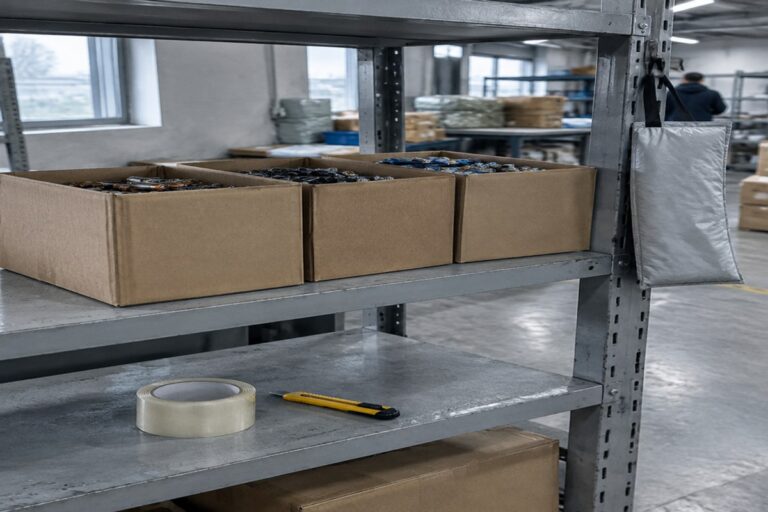
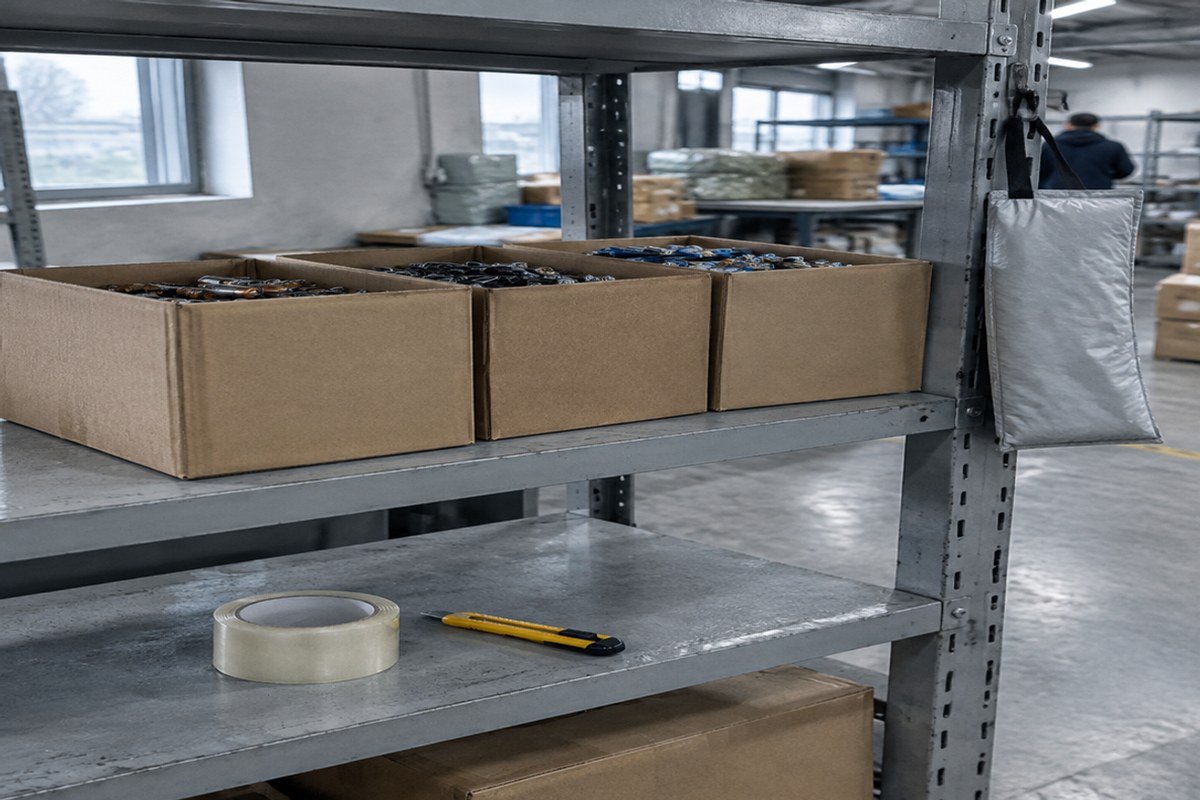
Warehouse checks on a battery parcel
Eligibility is decided by what the warehouse actually sees, not by the listing title. When a battery parcel is received, the team records the points below before any route is booked.
- Nameplate watt-hours, not just mAh. Wh = volts × amp-hours, so a 3.7 V, 10,000 mAh power bank is 37 Wh and a 48 V, 10 Ah e-bike pack is 480 Wh. Carriers accept or refuse a battery by watt-hour, so the label has to be photographed legibly - including Chinese-only labels, where the Ah or Wh figure still has to be readable in the photo.
- Installed, packed with equipment, or standalone. A cell inside a phone, a spare cell shipped loose in the same carton, and a retail-boxed battery are three different declarations with three different route positions. The warehouse confirms which one applies, counts the loose cells, and notes whether the device can be switched on to show it is not a dummy unit.
- Case, swelling and terminal condition. Dents, punctures, bulging, leaking electrolyte, corrosion, cracked housings and taped-over contacts are recorded as found. A swollen pouch cell is not made safe with more bubble wrap; it is quarantined or refused before it reaches a carrier.
- Terminals insulated and packaging intact. Exposed terminals must be taped or capped, each battery individually bagged, and the carton filled so nothing shifts. Retail packaging alone is not insulation, and original boxes are kept only when they do not get in the way of the required protection.
- Quantity and documentation on file. Cell count per parcel matters as much as the Wh rating, because limits are usually expressed per package as well as per battery. Where the carrier asks for a UN 38.3 test summary or an MSDS, the file is attached to the item record rather than requested again at the counter.
Route acceptance then follows from those checks. A lithium battery installed in the equipment it powers sits in the widest category and moves on most air and postal-style lanes; a spare cell packed with the device needs the quantity declared and the terminals insulated, which narrows the choice; standalone cells, power banks and bare packs land in the narrowest group, where many lanes refuse loose cells outright and the working limits are usually about 100 Wh per battery, 100–160 Wh only with explicit carrier approval, and cargo-class freight above that if it is accepted at all. A lane that carried the same item last month can stop accepting it without notice, so the route is confirmed for the actual parcel rather than remembered from a previous order.
Send the product link, the destination, and a photo of the battery label if you have one; the watt-hour figure, the installed/packed/standalone answer and the cell count are what turn a generic battery question into a route decision.
How CNCartGo handles the workflow
The battery workflow runs quote, purchase, warehouse, then shipping, and the classification step sits between purchase and shipping. If the warehouse finds a loose cell above the lane limit, a swollen pouch or missing UN 38.3 paperwork, the buyer can still reroute to a cargo-class service, split the cells or return the item while it is still inside China.
When a request arrives with the product link, the destination and a photo of the battery label, the team can classify the cell, compare its watt-hour rating against the lane limits and set an expectation the seller can actually meet. A general question about whether a battery can be shipped can only be answered in ranges.
A payment problem and a battery problem are separate questions, and it helps to answer them in that order. A declined card or a checkout that only accepts domestic Chinese payment methods has to be solved before the parcel exists, and it has nothing to do with whether the cell qualifies for air carriage. Keep the two apart instead of abandoning the order.
Battery freight is priced after classification, not before. Cells installed in the equipment they power travel under one rule, spare cells packed with the device under another, and standalone cells under the strictest one, so the same carton can be quoted on a different lane and at a different rate depending on what the warehouse records on the inspection sheet.
Common failure points
- Retrying a declined card on a battery order before checking whether the seller has supplied the UN 38.3 test summary.
- Sending a screenshot of a battery listing instead of the live Taobao URL that carries the Wh figure.
- Paying the seller before confirming that loose cells may leave on the chosen lane.
- Quoting air freight from the product weight while ignoring the watt-hour figure that decides whether the cell may fly at all.
- Buying loose cells from several sellers without planning to consolidate the packs under one warehouse inspection record.
Nearly every battery surprise traces back to the label rather than the carrier. Buyers send a product photo instead of the nameplate, quote milliamp-hours where the carrier asks for watt-hours, or assume a power bank travels like a phone case. One legible photo of the battery label prevents most of that.
What to send for a faster answer
Send the product link, the destination, the number of cells and a photo of the battery label. State whether the cell is installed in the device, packed in the same carton, or shipped separately, and attach any UN 38.3 test summary or material safety data sheet the seller provides. Those answers decide which lanes can be offered.
FAQ
What should buyers check for battery shipping from China?
Start with the battery itself: the watt-hour figure from the label, the chemistry, the installed / packed-with / standalone answer, and how many cells sit in the parcel. Route availability and price both follow from that classification, and no product title answers it.
When should I use a CNCartGo quote?
Ask for one once the battery details are known - watt-hours, cell count, packaging condition and destination. The review is what confirms whether a lane accepts the parcel, whether test documentation is required, and whether the route the buyer had in mind still works for that chemistry.
Can CNCartGo help with multiple sellers?
Yes. Cells from different sellers can be received, photographed and counted at the Guangzhou warehouse, and compatible parcels can then travel together. Because battery limits apply per package as well as per cell, the warehouse confirms the totals with you before consolidation is approved.
Is a calculator enough for final shipping cost?
No. A calculator works from weight and dimensions alone; it cannot read chemistry, watt-hours, cell count or terminal insulation, and those are the points that decide whether the parcel is accepted at all. Use an estimate to budget, then confirm the route by hand.
Last reviewed: September 5, 2026. Lithium battery rules and carrier acceptance change without much warning, so confirm requirements before dispatch.
Related guides
Battery parcels need manual review, and the checks that follow are set out here.
- Restricted Items When Shipping From China to Australia: Checks Before You Buy
- China Freight Calculator: What Overseas Buyers Should Check Before Trusting an Estimate
- Taobao Agent to USA Checklist: Product Link, Warehouse, Payment and Shipping
- 1688 Agent for Small Ecommerce Testing: Samples, MOQ, Warehouse and Shipping
- International Shipping From China: Warehouse, Consolidation and Quote Steps