Quick answer: Australia restricts more categories than most shoppers expect: batteries, liquids, cosmetics, food, fragile, branded and oversized goods all need review, so the item list matters more than the destination. Send the listing before you pay, and let the Guangzhou warehouse check and repack anything questionable before a route is offered.
Fast checklist before taking action
| Information | Why it matters | Best next step |
|---|---|---|
| Exact product link | The live listing names the material and function that Australian biosecurity conditions are tested against. | Send the listing URL so material and function are tested against BICON before quoting. |
| Material, ingredient or scent option and quantity | A wrong material, scent or ingredient option decides whether Australian biosecurity treats the item or refuses it. | Paste the option line so the material and ingredient are clear to biosecurity. |
| Destination country | BICON conditions and DAFF inspection apply on arrival, so one item may clear, be treated or be refused by description. | Name the Australian city and postcode, because the entry point decides which BICON condition and treatment apply. |
| Payment or checkout status | Payment failed, waiting for payment and a declined card each delay the Australian route check. | Stop retrying the card and ask for a permit and route check when the goods themselves are restricted. |
| Item risk | Seeds, timber, cosmetics, aerosols and lithium cells need a permit, a treatment or a route that excludes them. | Ask for a permit and BICON check before the goods are bought. |
Check the item against Australian import conditions before you pay the seller, because the category decides the route, not the price and not the destination city. Goods can be perfectly legal to buy in China and still be refused entry at the Australian border, and by then the international freight has already been spent. This is the shortest version of that check.
CNCartGo's advantage on Australia-bound orders is that the category question is answered before payment. Send the live listing and the team can say whether the goods fall under biosecurity conditions, whether a permit or an arrival treatment applies, whether a carrier will accept them at all, and what has to appear on the declaration, all while the seller is still holding the stock.
How CNCartGo handles the workflow
The order still runs in the usual order, quote then purchase then receiving then international shipping, but for Australia the first step carries more weight. A restricted-category review happens before purchase, because a permitted item and a prohibited one can look identical on a listing page and differ only in the material or the ingredient list.
With a clear product link, the destination state and a plain description of the item, the team can check the goods against the Australian conditions, work out whether biosecurity rather than customs is the relevant screen, and offer the routes that will actually carry the parcel. Where something looks borderline, the exact listing decides it, since a photo of a wrapped product tells nobody whether the tray is bamboo or plastic.
Restricted-item orders have their own payment logic: there is no point fixing a declined card for goods that cannot cross the border. Settle eligibility first and payment second. If the checkout will not complete, an agent order paid in RMB inside China is the workable fallback, and our own checkout takes Stripe or a Wallet Balance. PayPal is not offered on either side.
For Australia the freight quote is the last step rather than the first. Route availability, packing requirements and carrier acceptance of dangerous goods all depend on what is inside the carton, so a rate calculated before the item is checked is provisional. Batteries, aerosols and liquids can be refused by a carrier regardless of paperwork, and biosecurity items may need treatment on arrival at the receiver's cost.
Common failure points
- Assuming biosecurity rules apply only to food and farming imports.
- Buying lithium batteries or aerosols before confirming that a route accepts them.
- Describing a parcel as gift, sample or assorted accessories instead of naming the material.
- Treating an import permit or an arrival treatment as a formality rather than a cost.
- Ordering branded goods without keeping the listing and invoice as evidence.
The Australian mistake that costs the most is treating biosecurity as a farming-import issue. It applies to ordinary consumer goods: a bamboo tray, a leather belt, dried fruit, tea, herbal medicine, a feather trim, a shell decoration, seed-based craft goods. Buyers who assume those are normal parcel contents meet the problem at the border, where the options narrow to treatment, refusal or destruction.
What to send for a faster answer
For an Australia-bound quote, send the exact product link with the option and quantity, the destination state and postcode, and a plain description of the material: bamboo, leather, timber, dried plant material, lithium cells, aerosol. If an ingredient list or a UN 38.3 document exists for the product, attach it. Paperwork prepared in advance is what keeps a restricted-category item moving.
Australia-specific checks: biosecurity, prohibited imports, and what happens if a parcel fails
Australia screens incoming parcels twice over, for two different reasons, and a China-direct order can pass one screen and fail the other. Customs handles duties and prohibited imports through the Australian Border Force. Biosecurity handles anything that could carry a plant pest, animal disease or weed, and it is assessed by the Department of Agriculture, Fisheries and Forestry against the conditions published in BICON, its Biosecurity Import Conditions system. That second screen is the one overseas buyers underestimate, because it applies to ordinary consumer goods rather than to anything that looks like a farm product.
What biosecurity screens for
If a parcel contains or is made from plant or animal material, biosecurity conditions apply before it can be released. The categories that turn up most often in China-to-Australia orders are seeds and seed-bearing items, tea and dried herbs, dried or preserved food, herbal and traditional medicines, bamboo, rattan and untreated timber goods, leather and hide items, feathers, shells, honey products, soil and potting mix, and plant-based craft or festival goods. Packaging counts as well: wooden crates, straw filler and untreated pallets can trigger a hold on their own.
Each item is checked against BICON conditions, and the outcomes are not simply pass or fail. Goods may be released after inspection, require a valid import permit, be treated on arrival - fumigation, for example - at the receiver's cost, or be refused entry outright. Where the conditions cannot be met, the department states that the goods are destroyed or exported, and the receiver is the party who deals with it. A parcel that is sent back leaves at the owner's expense, and the international freight already paid is not refunded. A category check before purchase is cheaper than any repair afterwards.
Prohibited and restricted imports that catch shoppers
- Vaping goods. Disposable vapes became prohibited imports on 1 January 2024, and importing vaping devices requires a licence and permit from the Office of Drug Control. A vape, or a device marketed as a gadget accessory, is not an ordinary parcel item.
- Asbestos. Asbestos and asbestos-containing products are banned outright, including traces in brake pads, gaskets, insulation, some textiles and older electrical components.
- Counterfeit or brand-infringing goods. Seizure and penalties follow, and the listing and invoice are the evidence customs works from - keep both.
- Therapeutic goods. Medicines, supplements and many cosmetics are regulated by the TGA and are not treated as general merchandise.
- Agricultural and veterinary chemicals. Regulated by the APVMA, and some household pest-control products fall inside that group.
- Weapons, laser pointers, restricted drugs and tobacco. All controlled under the prohibited imports framework, and none of them are worth testing with a parcel.
- Lithium batteries and power banks. Not banned, but restricted as dangerous goods: carriers apply watt-hour limits, ask for UN 38.3 test documentation for cells, and refuse loose or installed batteries on some routes.
Declaring it so the screens pass
Both screens are read off the declaration, so the description has to name the material, not just the product: a bamboo serving tray, a leather belt, dried jujube fruit, a cotton hoodie. Words such as gift, sample, personal effects or assorted accessories remove the information an officer needs and are a reason for a hold rather than a way around one. Declare quantities and real values line by line, and keep the seller's listing and the payment receipt available to match them. Mis-description on a biosecurity-relevant parcel is not a paperwork slip: the Biosecurity Act 2015 carries infringement notices, civil penalties and seizure, and a parcel that fails is refused entry.
So the practical sequence for an Australia-bound order is: check the item against the Australian conditions first, ask whether a permit, treatment or labelling is needed, decide whether a route can carry it at all, and only then pay the seller. If a category is borderline, send the exact product link and let the Guangzhou warehouse confirm what is inside the carton before it is packed, because the same order can be shippable in one form and unshippable in another.
FAQ
Quick reference for the categories that most often need a manual check before a parcel leaves China for Australia:
| Category | Why it gets flagged | What to do before shipping |
|---|---|---|
| Batteries and power banks | Lithium cells are restricted on air routes and need documentation. | Send the exact product link so route compatibility is checked first. |
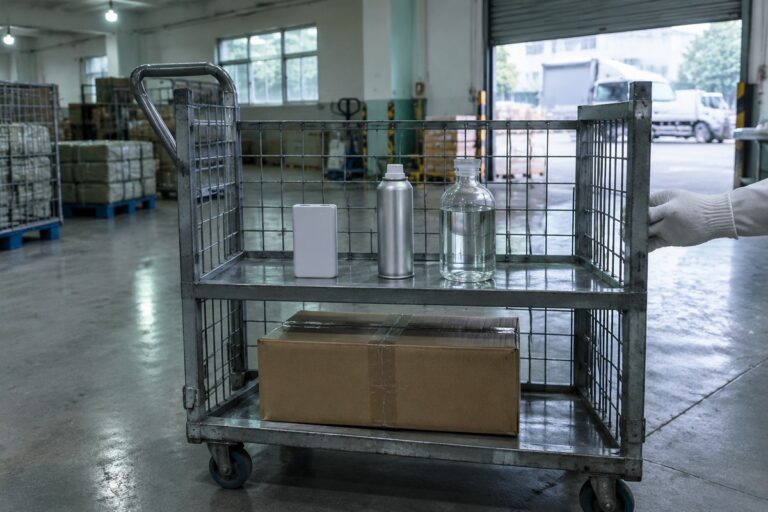
| Liquids, gels, creams and aerosols | Flammability and packaging rules apply, and some carriers refuse them. | Confirm the route before purchase; expect special handling or refusal. |
| Food, tea, seeds and plant material | Australian biosecurity rules are strict about plant and animal products. | Check the item against the destination rules and expect extra scrutiny. |
| Cosmetics, supplements and medicines | Ingredient and import restrictions differ from general merchandise. | Treat these as review-first items rather than standard parcel contents. |
| Branded or counterfeit-looking goods | Brand enforcement can lead to seizure and penalties. | Buy genuine goods and keep the listing and invoice as evidence. |
| Oversized or fragile items | Size, packaging and handling limits decide whether a route is usable. | Share packed dimensions and weight before paying for freight. |
What should buyers check for restricted items China shipping to Australia?
Check the material and the category first, then the route. Biosecurity conditions cover plant and animal material, while customs and border force rules cover vaping goods, asbestos, therapeutic goods, agricultural chemicals, weapons and counterfeit brands. Lithium batteries are restricted rather than banned: carriers want watt-hour data and, on some routes, UN 38.3 documentation.
When should I use a CNCartGo quote?
Ask for a quote whenever the item could be classed as restricted, whether that means food, tea, seeds, cosmetics, supplements, batteries, timber, leather or branded goods, or when the seller ships only inside China. The quote is where eligibility, packing and route are settled together before anything is paid.
Can CNCartGo help with multiple sellers?
Yes. Parcels from different Chinese sellers can be received, checked and combined at the Guangzhou warehouse, but consolidation does not change the category rules: each item has to clear the Australian screens on its own merits before it can be packed alongside anything else.
Is a calculator enough for final shipping cost?
A calculator can price a box; it cannot clear a category. Oversized or fragile packing, batteries, aerosols, food and branded items may need manual review, a special route or a decision not to ship, which is why an estimate is a starting point and not an approval.
Last reviewed: September 5, 2026. Border rules and prohibited-item lists for Australia are revised without warning; confirm them with the carrier first.
Related guides
Australian restrictions are only part of the picture; the related checks continue below.
- Battery Shipping From China: Manual Checks Before a Parcel Leaves the Warehouse
- Restricted Items in China Shipping: What to Review Before You Buy
- China Freight Calculator: What Overseas Buyers Should Check Before Trusting an Estimate
- Customs Duties After China Shopping: What Buyers Should Prepare Before Shipping
- Shipping From China to USA Cost Calculator: What USA Buyers Should Verify