
Short answer
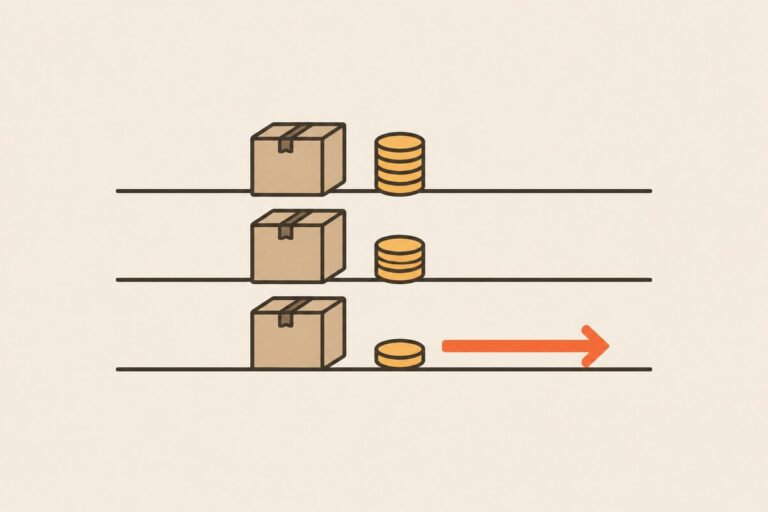
Consolidation can reduce international freight when compatible goods share an eligible route and the complete quote for the prepared combined parcel is lower than the separate-parcel alternatives. Compare chargeable weight, packing needs, included services and each parcel's storage deadline before approving preparation. Combining boxes does not guarantee a saving or a particular delivery date.
Where consolidation can change the cost
If the selected route has a per-shipment charge, compare how that charge appears in separate and combined quotes. Repacking may change the parcel dimensions and its actual or volumetric chargeable weight. A single delivery can also simplify recipient arrangements. These effects depend on the route and parcel; do not assume one declaration, one tracking arrangement or lower handling charges for every consolidated shipment.
Include applicable packing, storage, delivery and other excluded charges in the comparison. A smaller-looking carton is not sufficient evidence that the total bill will fall.
What consolidation is, in one paragraph
Sellers send goods to the receiving warehouse under the instructions for your order. Match each domestic tracking number and Received entry to its seller order before selecting parcels for a combined shipment. Confirm that all selected goods can travel together, approve the packing scope, and compare the prepared-parcel quote with the alternatives.
Under the Warehouse Storage Policy, each parcel's storage period is counted from its recorded Received date. The first 100 days are free. Days 101–200 cost USD 0.10 per parcel per day, with a maximum total storage period of 200 days. After 200 days, parcels are treated as abandoned and destroyed. The storage policy applies to all countries and regions; shipping eligibility still depends on the goods, destination and route. Record the dates for each incoming parcel before waiting for a late seller; a later arrival does not restart an older parcel's storage period.
The shipping risks to check before deciding
Chargeable weight. Ask how the selected route uses actual weight and dimensions, including any volumetric-weight rule. Record the measurements for both the combined and separate options. Removing retail boxes may reduce volume, but protection and any required labels or evidence must remain suitable.
Product compatibility. Batteries, liquids, cosmetics and fragile goods need product- and route-specific review. Their presence can affect whether items may travel together, the packaging required and the available route. Separate packing is also subject to acceptance checks; it is not automatic approval. Read the Prohibited & Restricted Items guide and Shipping Route Restrictions before purchasing or requesting preparation.
Declaration records. Keep accurate descriptions, quantities, values and purchase evidence for every item in the combined consignment. Consolidation does not change the goods or remove destination import requirements.
How the CNCartGo workflow supports the decision
For buying-agent orders, confirm the goods, applicable purchase charges and scope of service, then pay the purchase order before procurement. The current buying-agent service fee range is 6–15% of order value; confirm the actual tier and amount at checkout. Seller delivery to the warehouse is a separate stage. If you already bought the goods, request forwarding-only instructions and charges instead of assuming a purchase-service fee applies.
Review the available warehouse records and photos against the ordered variant, quantity and visible condition. Confirm the inspection scope and any additional fee; photos do not establish authenticity or full functionality. Resolve discrepancies and approve packaging changes before preparation.
Once the eligible parcel and route quote are confirmed, pay international freight separately. Payment confirmation and required shipping checks precede carrier handover. Warehouse receipt, a packing instruction or a label is not evidence of dispatch. Use the Payment Policy and current Service Fees for your actual order; this article does not specify a payment method or fixed transit range.
Who should compare consolidation quotes?
Multi-seller buyers should first list which orders have arrived and which remain in domestic transit. Restocking buyers can compare packing options for bulky or compressible goods. An order from one seller may already be one parcel, while a split seller order may still need matching and grouping. Decide from the parcels actually received.
For gifts or deadline-sensitive orders, compare current route estimates and the cost of waiting for remaining goods. Keep a shipment plan for items that cannot share a route rather than treating all orders as one automatic combined parcel.
Does consolidation always reduce cost?
No. Use complete quotes for the same destination, eligible services and included work. Compare actual or volumetric chargeable weight, protective packing, any preparation charge, storage and separate delivery charges. A heavy or oversized item can change the result; removing packaging can also create an unacceptable protection or evidence trade-off.
Choose the option that meets the route requirements and recipient needs at an acceptable total cost. If quote assumptions differ, ask for clarification before approving either option.
What to check before approving the packed parcel
- Prepared dimensions and actual weight recorded for the combined and separate options.
- The route's chargeable-weight basis and complete quote compared on the same scope.
- Goods confirmed as compatible together, with any required separate packing or route conditions recorded.
- Retail packaging removal specifically approved; protection, labels and required return or claim evidence retained.
- Available intake photos and Received records matched to each seller order before sealing.
- Product descriptions, quantities and values supported by the purchase and payment records.
- Recipient address, phone number and delivery or collection preference confirmed.
Getting a written quote
Use the logistics calculator as an estimate, with realistic parcel measurements and the intended destination. Read how final shipping costs are calculated after warehouse arrival before treating a preliminary figure as a shipment quote. For an unusual combination, request a manual route and consolidation cost review with the seller-order references, quantities and parcel details.
The buyer's guide and shipping policy explain the broader process. Buyers paying in another currency can also read using your own currency to shop from China and check the currency and amount shown for the actual payment.
Orders requested through the Taobao agent or 1688 agent service still need matching seller and warehouse records. Review the China warehouse consolidation instructions on CNCartGo and confirm the receiving details assigned to your order before asking a seller to send goods.
Record the decision before dispatch
Keep the selected parcel IDs, packing approval, measurements, quote and remaining-order plan together. Check every parcel's Received-based storage deadline, then confirm the separate freight payment and carrier handover record. This makes the consolidation choice reviewable without assuming a saving or a universal delivery window.
About the author: CNCartGo editorial team. This guide is a consolidation planning checklist.
Last reviewed: October 12, 2026. Confirm current storage terms, service scope and route charges for your order.
Related guides
Consolidation questions usually lead to these guides.
- Warehouse Repacking From China: When It Saves Money and When It Adds Risk
- How to Buy Fashion Jewelry From China in 2026: A Practical Guide for Small Sellers and International Buyers
- What If a Taobao Seller Ships Your Order in Multiple Packages?
- Package consolidation review: comparing packed-parcel options
- What If a China Seller Splits One Order Into Multiple Parcels?