A Real-World Weidian Order Review for Overseas Buyers: What We Checked Before Shipping
 Nicholas Chen
By CNCartGo Editorial Team
This review is based on a repeated order pattern we see with overseas buyers using Weidian for fashion items and small accessories: the listing looks promising, the price is attractive, and the real risk sits in the details that are easy to miss before payment. In this case, the order included one apparel item, one accessory, and one seller-confirmed color variant that needed checking again after the parcel reached the warehouse.
The point of this review is not to dramatize a routine order. It is to show what actually matters in a normal Weidian workflow when a buyer wants the order to stay practical, accurate, and worth shipping internationally. For most first-time buyers, the biggest mistakes happen long before export shipping is booked.

The Order Setup
The buyer was not trying to place a large wholesale order. This was a small personal purchase built around items that are easier to find on Weidian than on larger marketplaces. That matters because small mixed orders often create a false sense of safety. Buyers think the total spend is limited, so the downside must also be limited. In practice, even a modest order can become poor value if the wrong color ships, the sizing note is misread, or the parcel is forwarded before the buyer sees warehouse photos.
Before payment, the useful questions were narrow and specific:
- Was the exact color variant in current stock?
- Did the apparel item follow the stated size chart or a smaller shop-specific fit?
- Would the accessory arrive with the pictured packaging, or only the core item?
- Was domestic delivery to the warehouse already included in the seller quote?
That style of questioning is more effective than asking whether the seller is "trustworthy." Buyers usually get clearer answers when the request is tied to a detail that affects the order outcome. This is the same reason our guide on checking Weidian seller signals before payment focuses on listing clarity and real product evidence instead of vague reputation claims.
What Looked Fine on the Listing, but Needed a Second Check
The first issue was product photography. The listing photos were clean, but they were also polished enough that they could not answer the questions that mattered most. We needed confirmation on hardware color, actual fabric tone, and whether the accessory batch still matched the older pictures shown in the product page.
That kind of gap is common on Weidian. A listing can still be usable, but the buyer should not treat polished photos as proof that every small detail is stable. Where sellers move fast or work across multiple batches, photos often lag behind reality. The safest workflow is to confirm the exact version before payment and then confirm again when the parcel reaches the warehouse.

Where the Real Risk Showed Up
The order did not break because of fraud or a missing parcel. The real risk was ordinary mismatch. One item had two similar variant names, and the translated wording was close enough to confuse a first-time buyer. Another item used a size chart that looked standard at first glance, but the shoulder and length measurements suggested a narrower fit than the buyer expected. This is exactly the kind of order that looks easy until the buyer ships it out too quickly.
We see this often with niche fashion and accessory orders. The buyer is usually not dealing with one dramatic problem. They are dealing with three or four small ambiguities that add up to one expensive international mistake.
For that reason, the most useful checkpoint was not the platform page itself. It was the warehouse stage. Our article on what happens after payment in the warehouse workflow explains why that stage matters so much. Once the parcel is received, the buyer finally has a chance to verify the item in a controlled way before deciding whether export shipping still makes sense.
What We Checked at the Warehouse
When the order reached the warehouse, the useful checks were simple but specific:
- Did the received color match the seller-confirmed variant?
- Did the apparel label and measurements look consistent with the requested size?
- Was the accessory finish the same as the reviewed product page photos?
- Was there any obvious packaging damage that would make international shipping riskier?
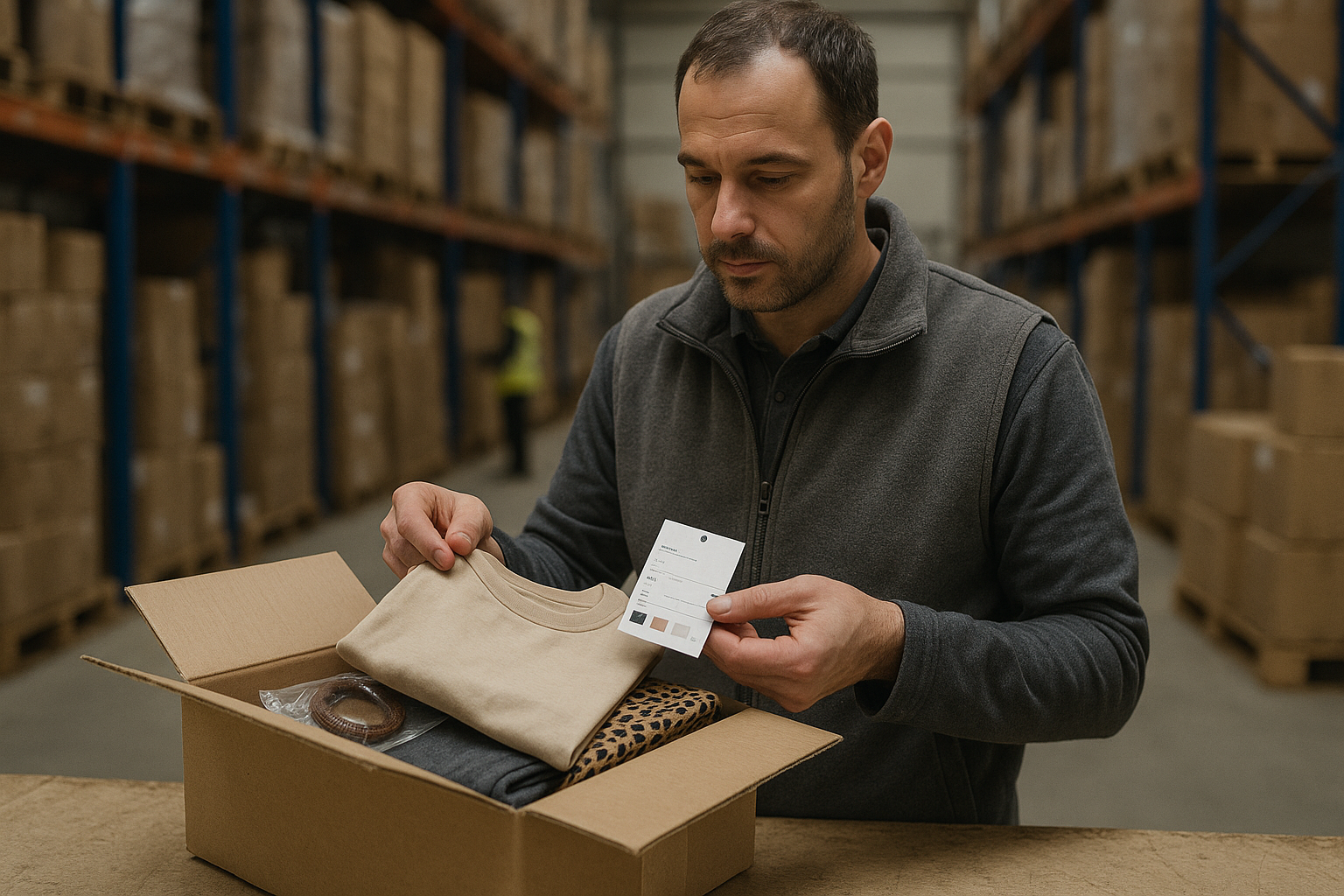
In this case, the warehouse photos mattered because one item looked darker under normal lighting than it did in the original seller images. That did not automatically make it wrong, but it gave the buyer a realistic basis for approval. Another small check confirmed that the accessory packaging was minimal, which mattered for gift use but not for product function. Those are the kinds of details that change whether a buyer chooses to continue, combine, or replace part of the order.
What This Order Tells Overseas Buyers
The main lesson is straightforward. A good Weidian order is not built on blind trust in the listing. It is built on a chain of small confirmations. First, the listing must be clear enough to justify payment. Second, the seller or buying agent must confirm any detail that could change the buying decision. Third, the warehouse review must be treated as a real checkpoint, not a formality.
That is also why buyers who use Weidian regularly often combine platform research with process discipline. They compare shop signals, ask short clarification questions, and wait for warehouse proof before forwarding the parcel. If the order contains multiple items from different sellers, the buyer also needs to think about timing, because rushing one parcel out can make the overall order more expensive. Our guide on timing parcel forwarding when orders arrive on different days is helpful when a mixed order starts landing at the warehouse in stages.
What Went Right, and What Needed Caution
What went right: the seller answered targeted stock questions, the domestic leg moved normally, and the warehouse photos gave enough visibility to make a confident shipping decision.
What needed caution: the listing photos were not detailed enough on their own, one variant name was easy to misread, and the apparel sizing needed a second review before the buyer could be sure the order was still worth forwarding.
That is a realistic outcome for many Weidian orders. It is neither a perfect one-click experience nor a disaster. It is a workable buying process that rewards careful checks.
Should You Ship, Replace, or Stop the Order?
In a case like this, the answer depends on whether the remaining uncertainty affects use, resale value, or return cost. If the item is functionally correct and the warehouse check confirms the key details, shipping usually still makes sense. If the color, sizing, or finish misses the intended use case, it is better to pause before export. International shipping is the expensive point to discover that a small mismatch is no longer acceptable.
Buyers who are new to Weidian often benefit from reading a broader platform overview alongside case-based examples. For that reason, it is worth pairing this review with our article on how overseas buyers use Weidian for niche fashion and hard-to-find items. The overview explains why the platform is attractive, while this review shows where the real operational checks belong.
Final Takeaway
A real-world Weidian order usually turns on ordinary details: variant wording, lighting differences in product photos, packaging expectations, and whether the buyer uses warehouse review as a real approval step. That may sound less exciting than a dramatic success story, but it is exactly where overseas buyers protect their money.
If there is one lesson from this order, it is this: the safer Weidian workflow is not faster. It is clearer. Clear listing review, clear seller questions, clear warehouse photos, and a clear shipping decision will usually outperform a rushed order every time.