China shipping scams are avoided by paying inside a card processor, checking the company entity and its written policies, and distrusting quotes far below the normal per-kg rate. Warning signs include requests for bank transfer or crypto, tracking numbers that never update, and pressure to confirm delivery early. CNCartGo charges a published 6–15% service fee and accepts Stripe, bank cards or Wallet Balance only.
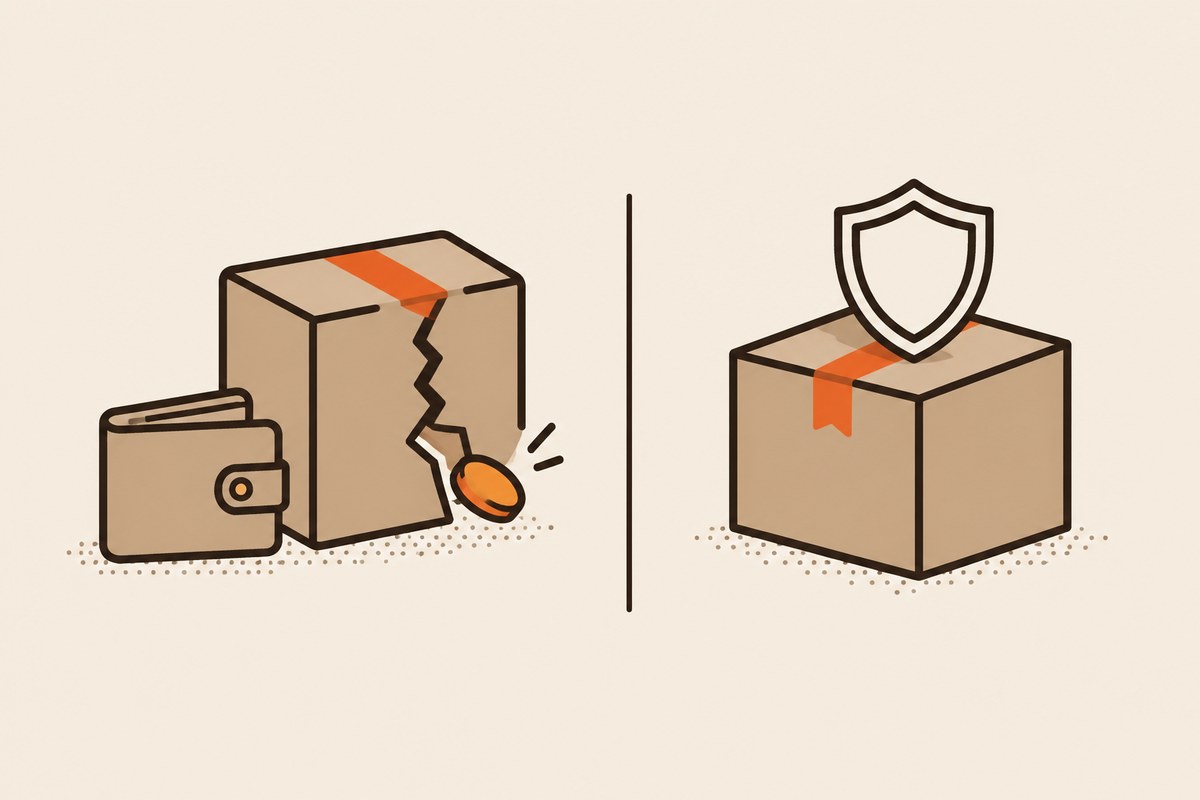
Six red flags to recognize
1. Payment outside the checkout
Legitimate agents process orders through a payment gateway. Anyone asking for direct bank transfer, crypto-only payment, or personal PayPal "friends and family" is a warning sign. CNCartGo checkout runs on Stripe, which keeps the transaction inside a PCI-compliant processor with card-level dispute options.
2. Unrealistically cheap shipping
International freight has real floor costs. A quote that is far below the typical per-kg range for a destination usually means the parcel will be re-quoted later, sent by a much slower line than promised, or never sent. Compare with a shipping calculator before trusting a bargain quote.
3. Fake or silent tracking numbers
After payment, real agents provide domestic tracking first (seller to warehouse), then international tracking after dispatch. A tracking number that never updates for weeks, or a "tracking site" the agent controls, is a classic scam pattern. CNCartGo's flow shows the warehouse receipt step before you pay for international freight, so you can confirm the item physically arrived.
4. Pressure to confirm early
Scammers push buyers to click "order received" before the parcel arrives. Legitimate agents let parcels sit in storage (CNCartGo gives 100 free days) and only ask for confirmation after delivery.
5. No company or warehouse details
Check the legal entity and warehouse address before ordering. CNCartGo publishes its Hong Kong company (QUADRANT PERSONAL SHOPPING TRADE CO., LIMITED) and Guangzhou warehouse address on its pages and help center.
6. Missing or vague policies
A serious agent publishes refund, after-sales and insurance policies. If the site has no return policy, no prohibited-items list and no compensation terms, walk away. CNCartGo's help center covers all three in writing.
Verification checklist before you pay
- Confirm the company name and registration location from the site's about/contact pages.
- Read the refund policy: what happens if the seller never ships?
- Check the payment method: card processors with 3-D Secure and dispute options are safer.
- Start with one small, low-risk order and follow the tracking stages.
- Keep screenshots of the listing, your order details and all chat messages.
Worked example: how a typical fake-forwarder scam unfolds
The pattern is consistent. Step 1: a social-media ad or a "too good" search listing offers shipping at half the market rate and asks for direct payment. Step 2: after payment, the victim receives a tracking number on a site the scammer controls - it shows movement for a few days. Step 3: the parcel "arrives" but is held for an invented customs fee, a storage fee, or a "refundable deposit," each request smaller than the last so the victim keeps paying. Step 4: once payments stop, the fake tracking site goes quiet. The defenses are structural: pay only through a card processor with dispute rights, require the warehouse-receipt stage with real photos, and never pay invented fees to release a parcel.
Common mistakes that make buyers vulnerable
- Paying "friends and family." This removes the dispute channel entirely - the single most common way buyers lose money.
- Not saving evidence. Screenshots of the listing, chat history and payment receipts are what card issuers and platforms need to reverse a scam.
- Trusting screenshots as proof. Order screenshots are easily faked. Real verification is a live tracking number and warehouse photos of the actual item.
- Ignoring policy pages. An agent with no written refund and insurance policy has already told you how a dispute will end.
Deeper FAQ
I already paid a scammer - what now?
Act immediately: contact your bank or card issuer to dispute the transaction, save every screenshot and message, and report the account on the platform where you found it. Recovery chances drop sharply after the first few days, so speed matters more than assembling a perfect case.
How do I check a tracking number is real?
Copy the number into the carrier's official site or a neutral tracker like 17TRACK. Numbers that only work on a site the agent sent you are a red flag. Cross-check the destination and the carrier match the service you paid for.
Where shipping scams get reported (and what that tells you)
Cross-border shopping complaints cluster on Trustpilot, Reddit communities like r/taobao and r/internationalshopping, and local consumer forums. Before paying an unfamiliar agent, search its name plus "review," "scam" and "reddit" - the absence of discussion is different from the absence of complaints. A pattern of the same complaint (fake tracking, invented fees, silent support) across platforms is a stronger signal than any single angry review.
The platform-side rules that protect buyers
On the sourcing side, Taobao and 1688 escrow holds payment until the buyer confirms receipt, which is why an agent buying domestically can cancel and refund before you are exposed. On the payment side, Stripe's dispute channel and 3-D Secure protect card payments. On the logistics side, insurance options cover loss in transit. Stacked together - escrow at purchase, cards at payment, insurance at shipping - the buyer's exposure at each stage is small if each stage is used correctly.
Verification quick reference
| Check | What passes | What fails |
|---|---|---|
| Payment route | Card processor with dispute rights | Direct transfer, crypto-only, friends & family |
| Pricing | Near market per-kg rates | Far below market |
| Tracking | Works on carrier's official site | Only works on the agent's own site |
| Policies | Written refund/insurance terms | No policy pages at all |
| Entity | Registered company + address | No company info anywhere |
Any single red flag is enough to walk away. Legitimate agents pass all five without prompting, because these are the same checks every informed buyer already runs.
FAQ
How do I know a China shopping agent is safe?
Check for a registered company entity, a published warehouse address, Stripe or similar card payments, and written refund/insurance policies. Then test with a small order before spending large amounts.
What should I do if I suspect a scam?
Stop payments, screenshot all evidence, contact your card issuer about a dispute if you paid by card, and report the seller or agent on the platform where you found them.
Does CNCartGo show warehouse proof before I pay shipping?
Yes. The workflow includes a warehouse receipt stage with QC photos after the item arrives in China, so you confirm the goods physically exist before paying international freight.
Do legitimate agents ever ask for extra money after payment?
Yes, and it is not automatically a scam: the international freight is legitimately charged after the warehouse weighs the parcel, and destination customs may bill VAT or duty. The difference is documentation - legitimate extra charges appear in the order flow with the weight, line and breakdown shown; invented "release fees" for parcels already paid come with pressure and vagueness.
How do I report a scam agent?
Report on the platform where you found it (Reddit, social media, ad network), file a card dispute with your bank, and if money was sent by bank transfer, report it to your bank and local cybercrime authority. Keep every message and screenshot - disputes are won on evidence, not on description.
What makes an agent's tracking trustworthy?
Two properties: the number works on the carrier's official site or a neutral tracker like 17TRACK, and the timeline matches the service you paid for (warehouse receipt first, then export, then destination). A number that only resolves on a link the agent sent you proves nothing.
Last reviewed: September 5, 2026. Because fraud patterns and reporting rules evolve, treat a quote as unverified until the provider's own page confirms it.
Related guides
If you are screening providers before paying, the next set of warning signs is worth reading.
- Is CNCartGo Legit? Company Background, Warehouse and Buyer Protections
- Is Buying From Taobao Safe? Risks Overseas Buyers Face and How Agents Reduce Them
- A Real-World Taobao Sneaker Order Review: What We Checked Before Shipping a Limited-Release Pair Overseas
- A Real-World JD.com Mechanical Keyboard Order Review: What We Checked Before Shipping Overseas
- A Real-World Taobao Clothing Size Review: What We Checked Before Shipping Overseas