Short answer
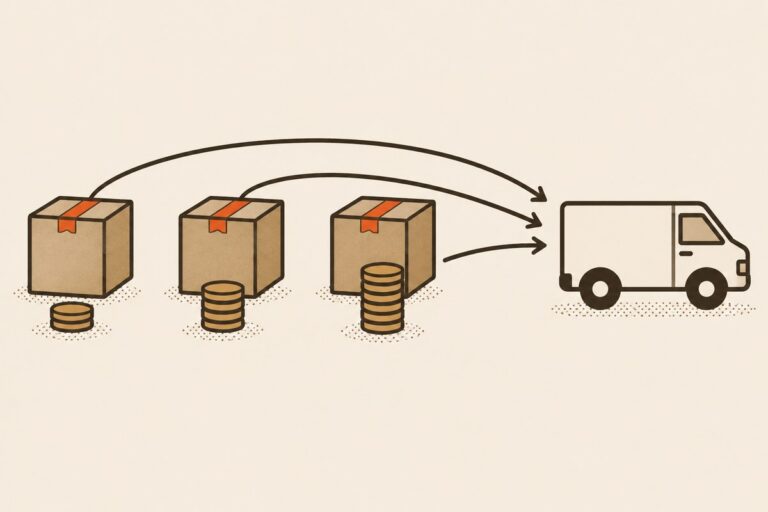
CNCartGo pays the Chinese seller in RMB for you, so you never need a Chinese bank card, marketplace account or mobile number. You fund each order from your own country: Stripe, a bank card and your Wallet Balance are the accepted methods, and PayPal is not among them. The 6–15% service fee is charged on the order handled, while the international leg is priced separately after weighing. The goods are then received, photographed, repacked and consolidated in our Guangzhou warehouse.
Why paying for Chinese products still feels hard
If you have tried to buy directly from Taobao, 1688, JD.com, Xianyu or Weidian as an overseas buyer, you already know the pattern. The page loads, the price is attractive, the stock is real - and then checkout asks for something you do not have. A Chinese-issued card, a mainland phone number for verification, an address inside the country, occasionally a real-name check tied to a Chinese ID.
The obstacle is structural rather than commercial. These platforms are built for a domestic market of hundreds of millions of buyers, and the domestic flow is fast and cheap because everyone in it shares an address system and a banking system. An international buyer is not blocked because the seller dislikes foreign money; the money simply has nowhere standard to go.
What CNCartGo actually is
CNCartGo is a China buying agent and parcel forwarder with a warehouse in Guangzhou. In practice that means three things happen on your behalf:
- We buy. A link becomes a quote, and the quote becomes an order placed with the seller in RMB.
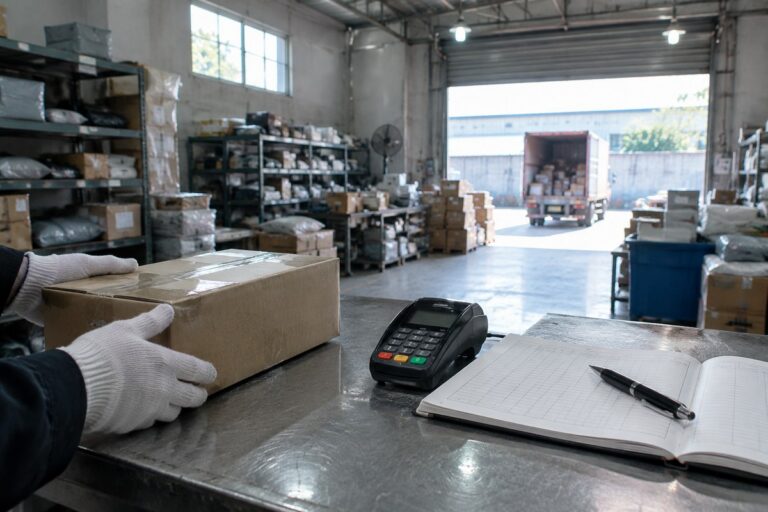
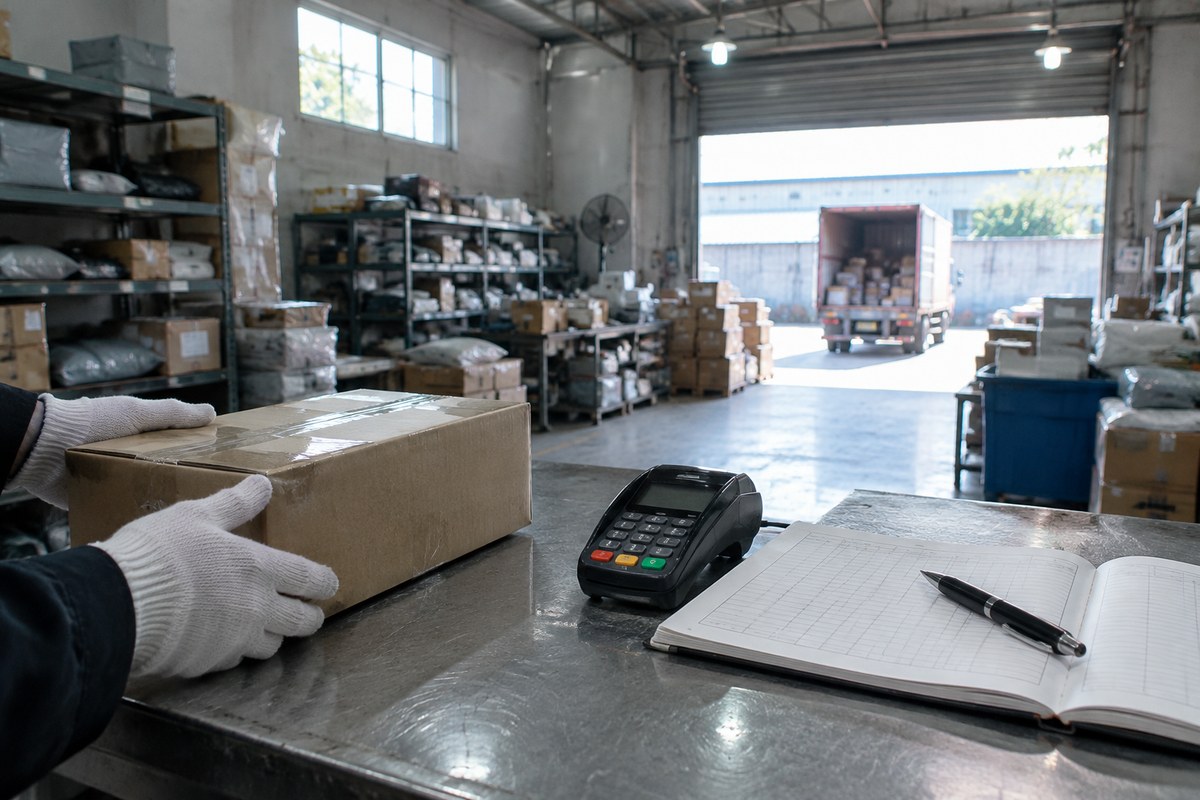
- We receive. The seller ships domestically to our warehouse, where the parcel is signed for, weighed, photographed and checked against your order line.
- We forward. Once you approve, the goods are packed and shipped internationally on the service you select.
There is also a shop channel for buyers who would rather start from a curated product page instead of a link they found themselves. The buying and forwarding workflow behind it is the same.
How you pay
Payment runs on Stripe, bank cards and Wallet Balance. PayPal is not available on this site, and any older page that still mentions it is out of date. In practice:
- Card through Stripe - the default for most buyers. Works with the major card networks and supports Apple Pay and Google Pay where your device offers them.
- Bank card directly - useful when you prefer to pay per order rather than hold a balance with us.
- Wallet Balance - top up once, then draw against it as orders are quoted. Handy when you expect several purchases in a short period, or when a card keeps failing on a cross-border merchant.
If a card declines, the cause is almost always on the banking side - a cross-border block, an address mismatch or an unfinished 3-D Secure step - rather than with the order itself.
The route from link to doorstep
- Send the product link. The quote form lives at /en/buy/. Add variant, quantity and any special instruction.
- Get a quote. We confirm the current price, availability and our service fee, which is between 6% and 15% depending on the order value.
- Pay. Card through Stripe, or Wallet Balance.
- We place the order. The seller dispatches domestically to Guangzhou.
- The warehouse receives it. Weight, dimensions and photographs are recorded; contents are checked against your order.
- You approve the packing. Consolidate with other parcels, remove unnecessary volume, add protection where it matters.
- Choose a service and ship. Express, postal or economy, and we book the route with the final weight on record.
Where the service fee sits
Our fee is 6–15% of the order value and covers sourcing and handling inside China. It is not a shipping charge and it is not a tax. International shipping is quoted separately and settled on actual weight, which is why the final figure can differ slightly from the estimate: couriers weigh after packing, and the difference is either refunded or topped up. Destination import duties and any customs handling charge are collected by the destination authority or its agent, not by us.
The warehouse is the control point
Everything that protects a cross-border purchase happens while the goods are still in China. The warehouse address to give sellers is 广州市白云区钟落潭镇乌溪村乌溪路奋进街61号. Storage is free for 100 days from arrival, after that ¥0.1 per parcel per day, with a maximum hold of 180 days.
That window is the reason a slow seller does not automatically ruin an order. It is also the reason a warehouse check matters more than a promise: a wrong size, a missing accessory or a substitute material can still be returned domestically while the parcel has never left the country.
Shipping: three services, three windows
- Express - 5–10 working days. For small, valuable and time-sensitive parcels.
- Postal - 10–25 working days. The balanced default for most orders.
- Economy - 20–35 working days. The cheapest per kilogram, suited to heavy, low-urgency goods.
Working days exclude weekends and public holidays at both ends. A route that looks slow on paper is often the correct commercial choice, and a route that looks fast is often the wrong one for a bulky carton because couriers bill on the greater of actual and volumetric weight.
Consolidation: several orders behaving like one
Buyers who shop across platforms - a jacket from Taobao, a skincare set from Weidian, an accessory from 1688 - accumulate small domestic parcels. Consolidating them into one export carton reduces handling events and usually reduces cost, though not always: a bulky box can exceed the combined chargeable weight of two compact ones. The warehouse can quote both options before you decide.
Security, refunds, and when something is wrong
Because the goods are inspected before export, most problems are caught at the point where they are cheapest to fix. If an item is wrong or missing, we raise it with the seller while domestic return is still possible. If a parcel is damaged in transit to the warehouse, the courier claim is filed while the delivery record is fresh. What we cannot do is reverse a problem that is only discovered after the parcel has cleared customs - which is exactly why the inspection stage is not optional.
Who this works for, and who it does not
It suits buyers who want access to Chinese platforms, who care about receiving what they ordered, and who are prepared to wait a few days for a warehouse check. It does not suit anyone hoping to bypass destination import rules, and it is not a route for prohibited goods - banned or restricted items cannot be forwarded regardless of how they were purchased.
Before your first order
- Save the product page and the variant you want.
- Check whether the item is in stock or made to order.
- Know the service fee range and the fact that shipping is billed on actual weight.
- Budget for import tax in your own country.
- Pick a deadline you can live with, then choose the service that matches it.
Send the link to /en/buy/ to start. Further reading: what a buying agent does, shopping Taobao without a Chinese payment method and the full pay-buy-inspect-ship workflow.