Best Way to Buy from 1688 Without a Chinese Bank Card

Best Way to Buy from 1688 Without a Chinese Bank Card is not really just a payment question. It is a full buying-process question. Many international buyers can find attractive factory and wholesale offers on 1688, but the real friction starts after that: payment, seller communication, domestic delivery inside China, warehouse receipt, inspection, and international shipping. Alibaba's own SmartBuy guide describes 1688 as Alibaba's domestic China marketplace, operating mainly in Mandarin, using local payment methods, and often not shipping internationally. That is exactly why many overseas buyers need more than a checkout workaround.
A platform like CNCartGo solves that broader problem by turning a fragmented China-only workflow into a cross-border one. CNCartGo's public pages say buyers can paste 1688, Taobao, and Weidian links, pay through supported methods such as Stripe, PayPal, and wallet balance, let CNCartGo's procurement team place the China-side order, have goods inspected and photographed at the warehouse, then pay international shipping after the parcel is weighed and a route is selected. That is much closer to what an international buyer actually needs.
Why is 1688 difficult for international buyers without a Chinese bank card?
1688 is built for the domestic China market first
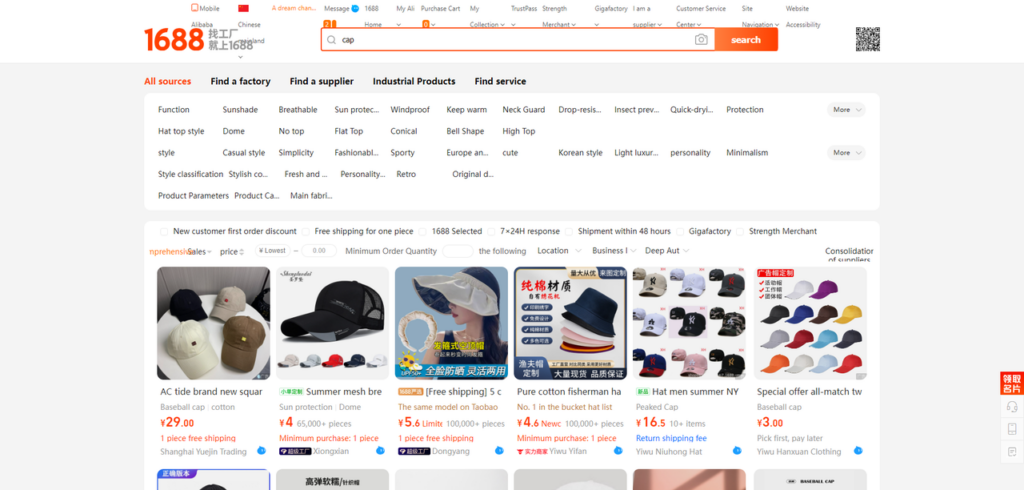
The biggest issue is not that overseas buyers are unwilling to pay. It is that 1688 was not designed around foreign checkout habits. Alibaba's SmartBuy guide says 1688 primarily serves the domestic Chinese market, operates in Mandarin, requires local payment methods, and often does not ship internationally. That means even if a buyer understands what product they want, the platform can still feel difficult to use from abroad.
Payment is only one barrier
Some overseas users can link international bank cards to Alipay for certain mainland China payment scenarios. Alipay+ says international bank cards can be added to Alipay for daily purchases in the Chinese mainland, but it also states those cards do not support every function, such as person-to-person transfers and some other financial services. Even when payment is technically possible somewhere in the ecosystem, that still does not solve seller-side communication, domestic receiving, inspection, or international shipping from 1688 suppliers.
1688 buying often breaks at the logistics stage
Even if an international buyer manages to communicate with a seller, there is still the question of where the goods go first. Many 1688 sellers are set up for domestic Chinese fulfillment, not direct overseas delivery. Alibaba's SmartBuy guide explicitly says agents matter because 1688 often does not ship internationally, and because buyers need help with procurement, inspection, and logistics support. That is why the best solution is usually not "find a payment trick." It is "use a workflow that covers China-side execution."
Why is a full-service buying agent usually the best option?
It replaces missing local operations
A Chinese domestic buyer usually has several advantages that an international buyer does not: local payment access, a domestic delivery address, easier seller communication, and a simpler after-sales path. CNCartGo's Buyer's Guide shows how a buying agent can replace those missing pieces. It states that buyers first pay for the product and domestic shipping, then CNCartGo's procurement team contacts the seller on the buyer's behalf, receives the goods at the warehouse, inspects them, and later handles international parcel submission and shipping.
It lets buyers pay in supported international methods while CNCartGo buys in RMB
CNCartGo's public Buyer's Guide says shopping-service orders support multi-currency payments in foreign currencies and RMB, while its Payment Policy says the platform supports Stripe and wallet balance, and the Buyer's Guide also mentions PayPal, Stripe, and account balance as supported payment methods. That means the international buyer can pay CNCartGo in a supported cross-border flow, while CNCartGo handles the actual China-side purchase in local-market form.
It adds inspection and shipment control before export
This is one of the biggest advantages over trying to buy directly. CNCartGo's Buyer's Guide says the warehouse receives and inspects goods, weighs and stores them, and takes actual product photos for buyer review. It also says issues found are reported to the buyer and that the warehouse offers 30 days of free storage. That means the buyer gets a real control point before the goods are sent overseas.
How does the CNCartGo workflow work for 1688 orders?
Step 1: Find the product and submit the link
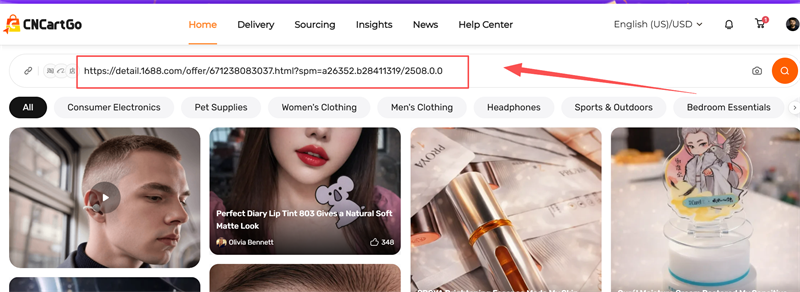
CNCartGo's homepage and Buyer's Guide say buyers can paste 1688, Taobao, and Weidian links into the search bar on the Home page. The guide specifically says the search workflow supports those platforms, while other platforms should go through Sourcing (DIY Orders). For 1688 buyers, that means the first step is simple: copy the 1688 product link and bring it into CNCartGo's workflow.
Step 2: Pay for the product and domestic shipping first
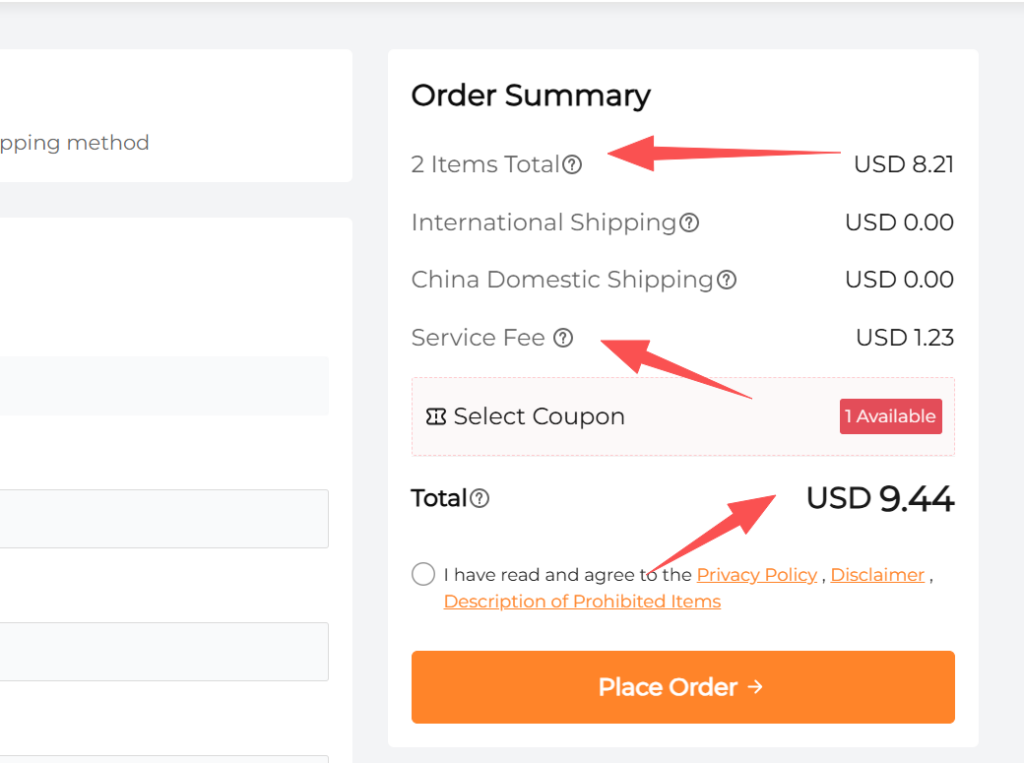
CNCartGo's Buyer's Guide says buyers submit the purchase order, choose a payment method, and pay for the product price plus shipping to mainland China. The guide also makes an important point: international shipping costs are not shown before this payment for shopping-service orders. Instead, CNCartGo says it will provide the final price based on the actual weight and shipping method before shipment.
This is a practical and realistic model. At the start, there is no finished export parcel yet. The product still needs to be bought, sent domestically, received into the warehouse, and potentially combined with other items.
Step 3: CNCartGo procures from 1688 on your behalf
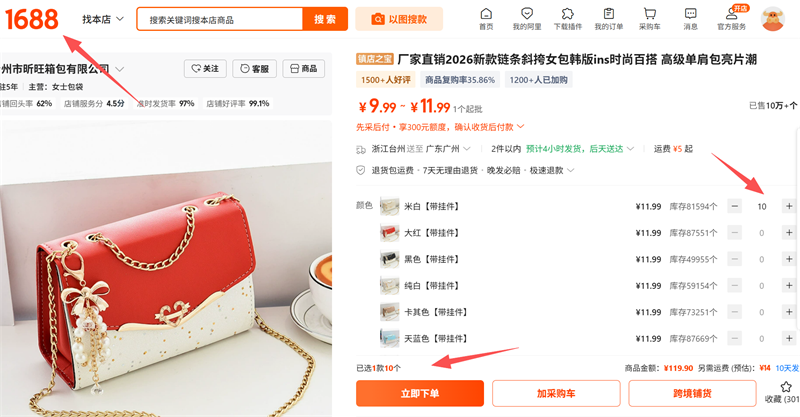
The Buyer's Guide says CNCartGo's procurement team contacts the seller on the buyer's behalf to place the order. It also says buyers can use the Work Order System or WhatsApp during procurement if they need to provide extra details or requests. That matters because many 1688 orders involve specification questions, color or size confirmation, or seller-side follow-up that overseas buyers may not want to handle directly in Chinese.
Step 4: The warehouse receives, inspects, and stores the goods
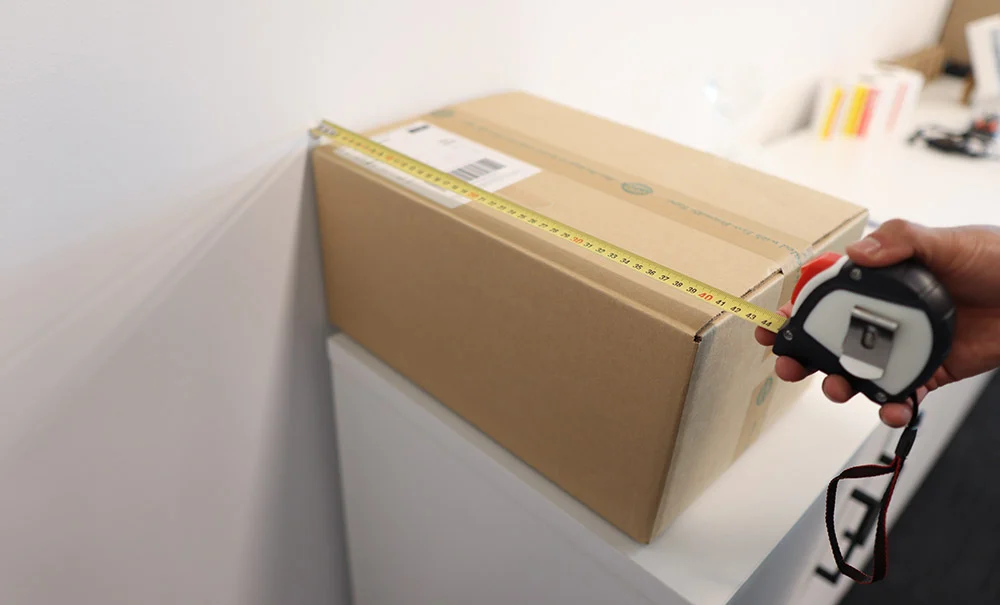
Once the goods arrive, CNCartGo says the warehouse receives and inspects them, weighs and stores them, and takes actual product photos. If problems are found, the buyer is informed. This is one of the strongest parts of the workflow, because an overseas buyer can review the order before export. That is far better than discovering a wrong item only after it lands internationally.
Step 5: Submit the parcel after the right items have arrived
CNCartGo says that in the Warehouse section, buyers can see which items have actually arrived. If only some items from a multi-item order have reached the warehouse, only those items appear. The guide also notes that some items may be subject to route restrictions and that services such as unpackaging, reinforcement, and insurance are available. This gives buyers a chance to wait, review, and prepare the parcel more intelligently.
Step 6: Pay international shipping after the parcel is ready
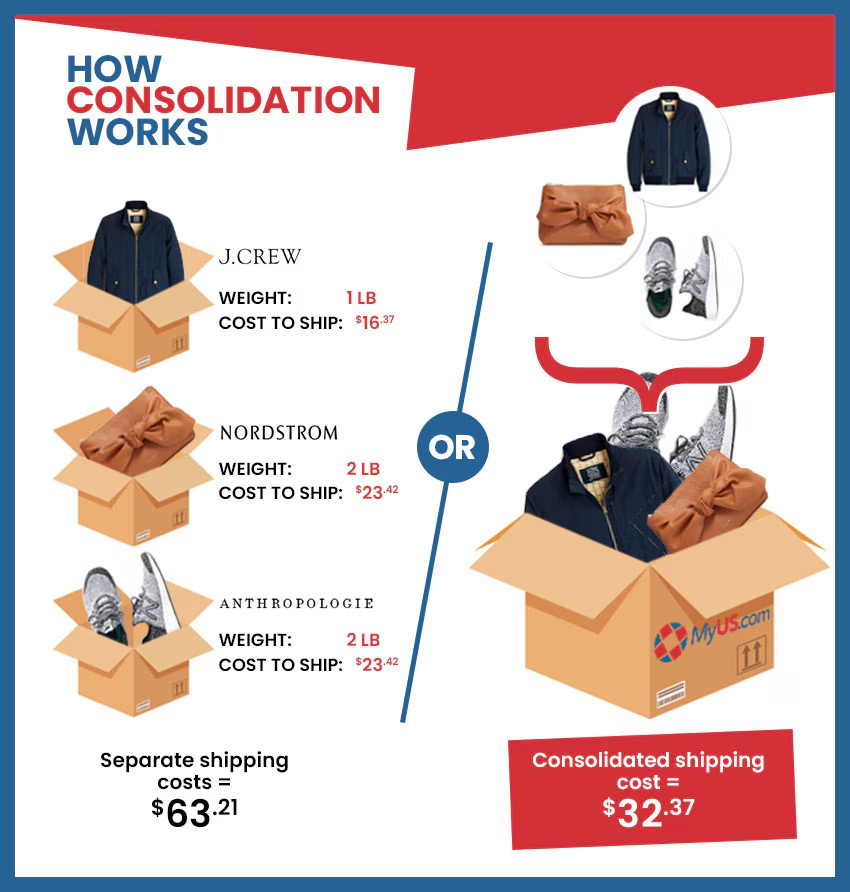
CNCartGo's Buyer's Guide says buyers then select their address in My Parcels, choose a shipping method, and proceed to checkout for international shipping. Its Shipping Policy says shipping costs are calculated automatically based on destination, package weight, and shipping method, and that the platform offers standard, express, and economy options, with example carriers such as EMS, ePacket, DHL, FedEx, and UPS.
This is exactly why the full-service model is so useful. The shipping bill is based on the real parcel after warehouse handling, not on guesswork from the original 1688 listing.
What if the product is not easy to handle through the normal 1688 search flow?
Use the Sourcing workflow
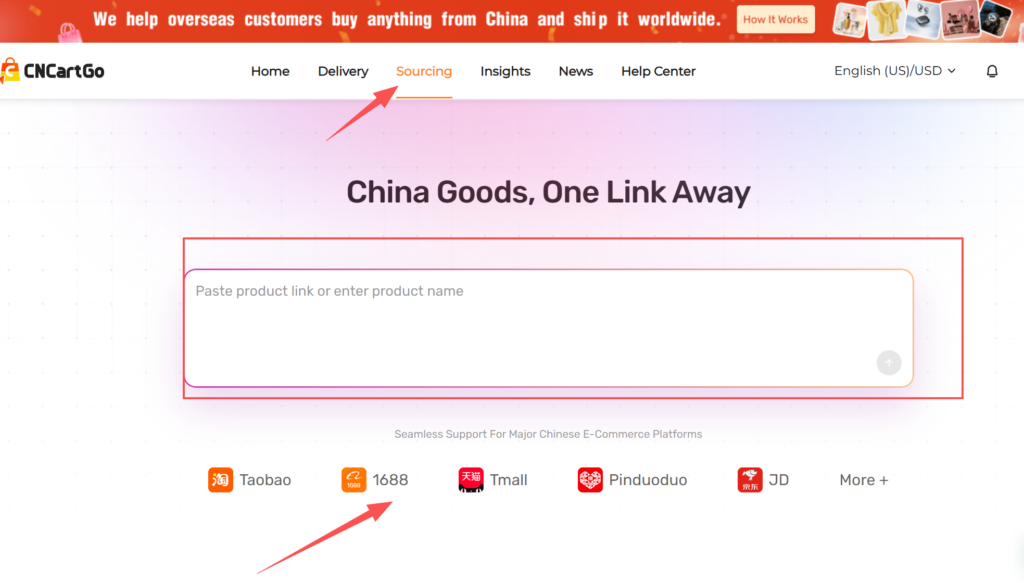
CNCartGo's Buyer's Guide says that platforms not covered by the Home-page search should go through Sourcing (DIY Orders). It explains that the sourcing service uses an AI chatbot and allows buyers to provide a product link or product details, enter specifications, submit the request, and then wait for a quote after the items have been received into the warehouse.
That is useful when:
- the 1688 link has unusual options
- the item is from another Chinese platform
- the buyer wants to attach remarks or images
- the product is easier to describe manually than through standard search
What real buyer situations does this workflow fit best?
Small business and reseller sourcing
This is one of the strongest use cases. A small store owner in the US or Europe may want to source packaging, accessories, or fast-moving goods from 1688, but may not have a Chinese bank card, local warehouse, or Chinese-speaking staff. Alibaba's SmartBuy guide specifically describes agent services as useful for e-commerce sellers, retail resellers, and businesses sourcing affordable inventory, while CNCartGo's workflow adds warehousing, inspection, and export shipping on top.
Buyers combining 1688 with other China platforms
CNCartGo's homepage and guide say buyers can work with 1688, Taobao, and Weidian through the standard search flow, while other platforms can go through Sourcing. That means a buyer can mix orders from several Chinese platforms into one warehouse process instead of treating each marketplace separately. For many overseas buyers, that is much easier than juggling different payment, seller, and shipping methods one by one.
Buyers who already have goods in China and just need shipping
CNCartGo also provides a Delivery Order flow. Its Buyer's Guide says buyers can enter the shipping carrier, tracking number, product name or link, category, quantity, price, and attributes, then wait for warehouse inspection and receipt before choosing international shipping and receiving a quote. That is useful when goods are already in China but the buyer still needs warehouse handling and export logistics.
What should buyers still check before ordering?
Return rules still matter
CNCartGo's Return Refund Policy says it offers a 5-day return/exchange service for eligible orders, but also lists conditions: the seller must support returns, the item must stay resalable, and the customer covers return shipping. It also lists non-eligible categories such as customized products, second-hand goods, and certain personal-use products. So even with a buying agent, buyers should still verify return assumptions early.
Customs and shipping fees are separate
CNCartGo's Shipping Policy says shipping fees do not include customs duties, import taxes, or other fees charged by destination authorities, and that these costs are the recipient's responsibility where applicable. That means buyers should look beyond just the product cost and the platform shipping charge when estimating total landed cost.
Conclusion
Best Way to Buy from 1688 Without a Chinese Bank Card is usually not to force a direct domestic-market checkout path that was never built around overseas use. The better solution is to use a full-service buying workflow that covers the whole chain: supported international payment, RMB-side procurement, seller communication, warehouse inspection, parcel consolidation, and international shipping. Alibaba's own guidance on 1688 agent services and CNCartGo's published workflow point in the same direction: international buyers often need an intermediary because 1688 is domestic-market oriented, relies on local payment methods, and often does not ship internationally.
For buyers who want a realistic, manageable process, CNCartGo's public model fits that need well: paste the 1688 link, pay in a supported method, let CNCartGo buy in RMB, review inspected goods at the warehouse, then choose and pay international shipping after the parcel is ready. That is usually the most practical way to turn a China-only buying environment into a workable cross-border order.
Read More:
No RMB? No Problem: How to Buy from Taobao and 1688 Without Chinese Payment