How CNCartGo Helps Global Buyers Pay, Source, Inspect, and Ship from China

How CNCartGo Helps Global Buyers Pay, Source, Inspect, and Ship from China becomes much clearer once you look at the real problems overseas buyers face when they try to order directly from Chinese platforms like 1688, Taobao, JD, Weidian, or Pinduoduo. For many international users, the challenge is not just finding a product. The harder part is completing the full process: paying in a usable currency, communicating with sellers, checking product quality, combining multiple orders, and shipping everything abroad at a reasonable cost. CNCartGo is positioned as a one-stop cross-border buying and forwarding platform that helps solve that full chain instead of only handling one step.
Why buying directly from Chinese platforms is still difficult for many global buyers
Payment is possible in some cases, but not always simple
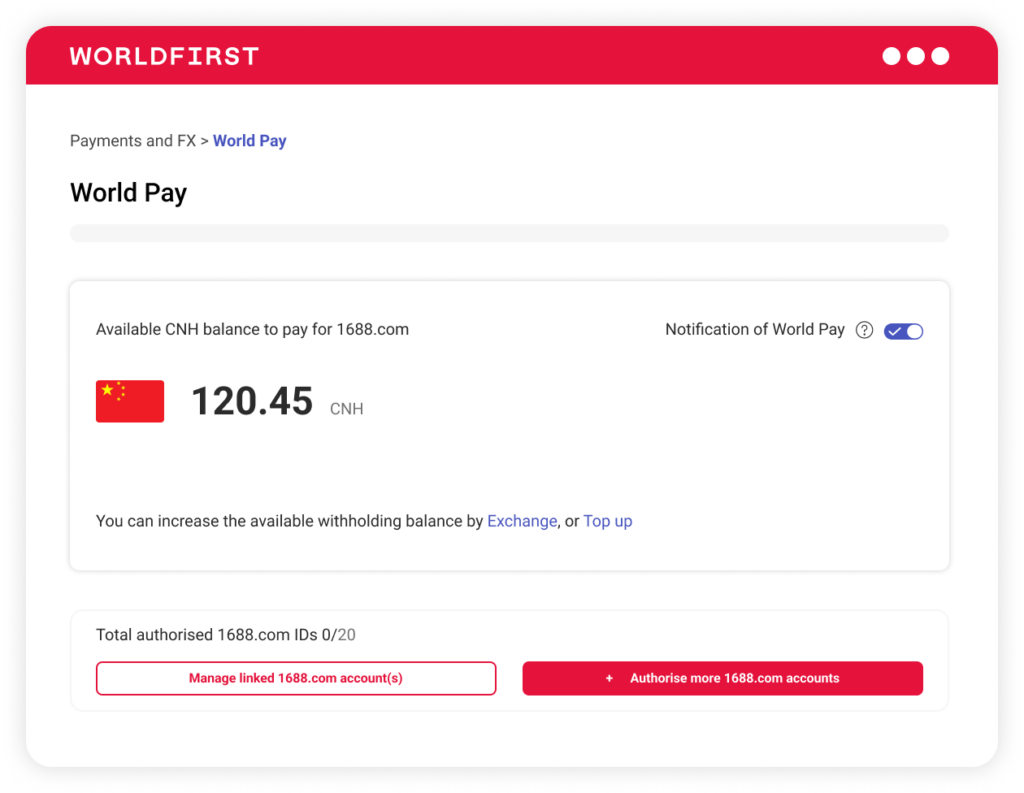
A fully direct path on 1688 is improving, but it is still not equally smooth for every overseas buyer. WorldFirst, which presents itself as 1688's official payment partner, says some international buyers can use World Pay, and in some cases credit or debit cards or Alipay in limited regions. That means the situation is more nuanced than saying "foreigners cannot pay at all." At the same time, many buyers still find the process difficult because payment setup, currency conversion, platform language, and supplier expectations are still built around China's domestic commerce environment.
Payment is only one part of the problem
Even when payment works, global buyers still run into other barriers:
- supplier communication in Chinese
- domestic shipping from seller to warehouse
- product inspection before export
- consolidation of goods from multiple sellers
- international shipping choices
- after-sales handling if something is wrong
That is why many buyers do not actually need only a payment tool. They need an operational workflow that connects procurement, warehouse intake, inspection, packing, and export shipping in one place. CNCartGo's own Beginner's Guide describes its model through services such as Buy, Delivery, and Sourcing, with international forwarding and personal shopping from Chinese platforms built into the flow.
What CNCartGo does in the middle of the process
It lets overseas buyers pay in a more practical way
According to CNCartGo's payment policy, the platform currently supports Stripe and wallet balance payments, with support for cards such as Visa, Mastercard, American Express, Discover, UnionPay, JCB, and others, plus supported wallet methods like Alipay, WeChat Pay, Apple Pay, and Google Pay in applicable regions. The site also states that its default settlement currency is USD, while other displayed currencies are for reference. This matters because it creates a more familiar payment layer for overseas buyers before CNCartGo handles the RMB-side procurement workflow.
In practical terms, that means a buyer can pay CNCartGo in a supported international method, and CNCartGo can then complete the China-side purchasing process. For many users, this is easier than trying to solve foreign card acceptance, RMB settlement, and supplier-side payment expectations by themselves.
It turns product links into actual procurement orders
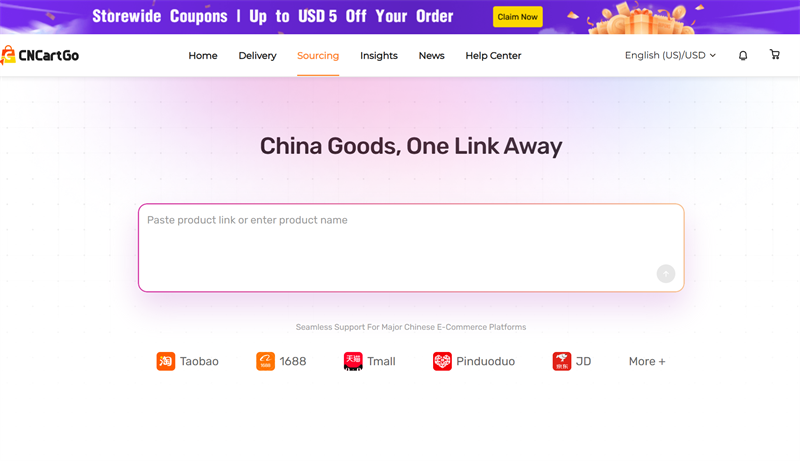
CNCartGo's homepage invites users to paste 1688, Taobao, and Weidian links, upload a photo, or search keywords. Its Beginner's Guide also says the platform supports buying from Taobao and 1688, forwarding international deliveries, and handling "Sourcing" or DIY orders from any Chinese platform. That gives buyers more than a catalog. It gives them a way to submit products that are not already listed on the site.
So if a buyer finds an item on 1688, Pinduoduo, JD, Weidian, or another China-based marketplace, the normal workflow can be described like this:
- Copy the product link
- Paste it into CNCartGo's sourcing area
- Add product notes, specifications, quantity, or variant details
- Wait for sourcing confirmation or price review
- Pay once the order details are confirmed
If your internal process includes a dedicated WhatsApp-assisted ordering path, you can insert it here: [Add your exact WhatsApp ordering process here].
It adds inspection before international shipping
One of the biggest differences between direct buying and a managed buying workflow is inspection before export. CNCartGo's service fee page says the warehouse team checks each product's appearance, quantity, and functionality as part of inbound management, and it also lists optional photo inspection as a value-added service. The platform further explains in its after-sales policy that claims usually require clear photos or videos.
This inspection step matters because once a parcel has already crossed borders, returns and disputes often become slower, more expensive, and more complicated. A warehouse-side check helps buyers confirm whether the right color, size, quantity, packaging, or visible condition matches the order before shipping begins. If your team also provides video inspection as a standard or optional service, you can add that detail here: [Add video inspection rule here].
How the full CNCartGo workflow works
1. The buyer selects products from Chinese platforms
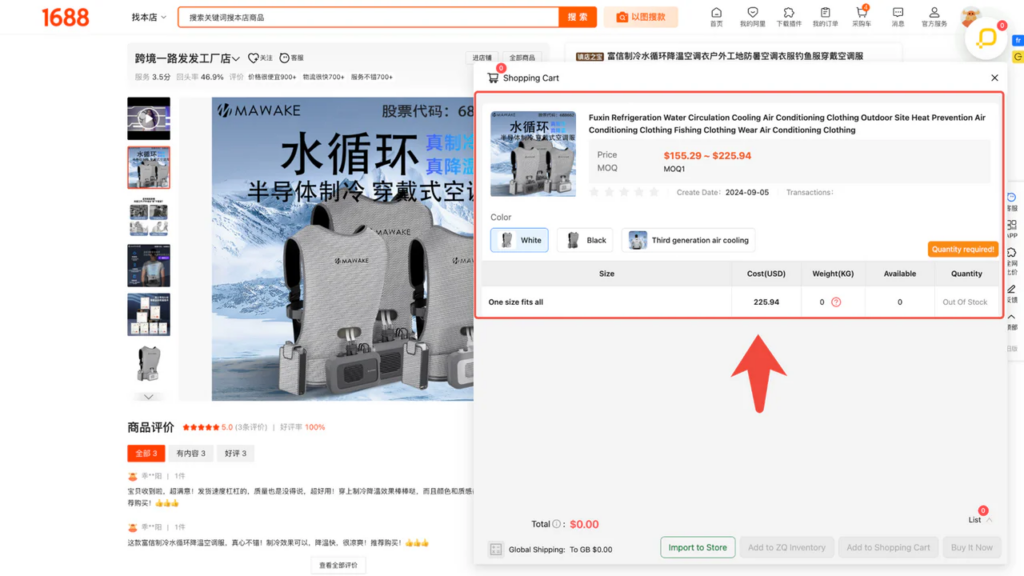
The buyer may choose products from 1688, Taobao, JD, Pinduoduo, Weidian, or other Chinese platforms. If the item is not already visible on CNCartGo, the buyer can submit the product link through the sourcing function. CNCartGo's guide explicitly positions Sourcing as a personal shopping or DIY ordering path from Chinese platforms.
2. CNCartGo procures the goods in China
Once the product details are confirmed, CNCartGo places the order on the buyer's behalf. The platform's service fee page says its service fee covers procurement service, communication with suppliers, product information verification, inspection, warehousing, packaging, and international shipping assistance. It also shows a tiered service-fee structure: 15% under $50, 10% for $50–$200, and 6% above $200.
This is useful for buyers because it turns several hidden tasks into one visible workflow. Instead of paying a seller, then arranging domestic delivery, then finding a warehouse, then arranging export, the buyer deals with one operating platform.
3. The goods arrive at the warehouse for checking
After the seller ships domestically inside China, the goods are received into the CNCartGo warehouse. At that stage, the warehouse can inspect appearance, quantity, and basic product condition. If the buyer has ordered multiple products from different sellers, those items can wait at the warehouse until the buyer is ready to consolidate them. CNCartGo says its service includes up to 90 days of free storage, and it lists order consolidation as free.
This is especially valuable for buyers who do not want to pay international shipping multiple times. A buyer can order ten small items from several sellers, receive them first in China, and then combine them into one export parcel instead of ten separate overseas shipments. That can reduce total shipping cost significantly, especially for low-value accessories, samples, or mixed test orders.
4. The buyer reviews the goods before shipment
After warehouse intake, the buyer can review inspection feedback, product photos, or other confirmation materials depending on the service chosen. This is the point where mistakes can still be caught early. For example:
- wrong color
- wrong size
- missing quantity
- visible damage
- poor packaging
- incorrect seller fulfillment
If there is a problem, the buyer has a better chance of handling it while the goods are still in China. CNCartGo's return and after-sales policies show that eligible items may qualify for return or exchange, and seller or warehouse review is part of the process. Claims generally need to be submitted within the relevant validity period and supported with evidence.
5. The warehouse packs, weighs, and calculates shipping
Once the buyer confirms the order is ready, the warehouse prepares the parcel for export. CNCartGo states that international shipping is calculated separately before shipment, based on actual weight or volumetric weight. Its shipping policy also says shipping fees depend on destination, package weight, and method.
That means the shipping bill is not just guessed in advance. It is calculated after the goods are physically in hand and packed. This is a major advantage for buyers who care about cost control, because the warehouse can weigh the real parcel rather than estimate blindly from a marketplace listing.
If your workflow includes a separate "freight confirmation" page or package review page, you can add it here: [Add exact freight-bill confirmation step here].
6. The buyer chooses a logistics route and pays shipping
CNCartGo says it offers multiple logistics recommendations and shipping support. Its shipping policy lists example delivery types such as standard shipping, express shipping, and economy shipping, with examples including EMS, ePacket, DHL, FedEx, UPS, and postal services. It also notes that transit times vary and that customs, weather, and carrier delays can affect delivery windows.
This gives buyers more control. Some want the cheapest route. Some want the fastest. Some want a balance between the two. A flexible forwarding model works better than a one-channel-only approach.
If your team offers country-specific routes, tax-included lines, special-cargo channels, or warehouse-to-business shipping solutions, you can insert them here:
Real-world scenarios where this model makes more sense
Scenario 1: A small buyer testing products
A buyer in Europe wants to test five low-cost home accessories from three different 1688 sellers. Direct purchasing may be possible in theory, but it still creates a fragmented process: multiple sellers, multiple domestic shipping charges, no single inspection point, and potentially multiple export parcels. With CNCartGo, those products can be procured, sent to one warehouse, checked, combined, and shipped together. That makes the test order more organized and often more economical.
Scenario 2: A reseller building a mixed inventory order
A small Shopify or marketplace seller may want to restock products from several Chinese suppliers in one batch. In that case, consolidation matters just as much as payment. The seller needs the goods grouped, verified, and packed efficiently before export. A managed sourcing-plus-forwarding workflow is often easier to scale than trying to coordinate each supplier one by one.
Scenario 3: A buyer sourcing from a platform not fully listed on-site
Not every product a buyer wants will already be on CNCartGo. That is why the sourcing function matters. Instead of waiting for a catalog listing, the buyer can submit the product link and order details manually. This makes the platform useful not only for browsing, but also for flexible procurement from across the Chinese ecommerce ecosystem.
What buyers should still confirm before ordering
Even with a helpful buying agent workflow, buyers should still confirm the basics before paying:
Product details
Check size, color, materials, voltage, packaging, quantity, and model number.
Seller limitations
Some sellers may have MOQs, custom-production rules, or non-returnable categories.
Return window and evidence rules
CNCartGo's return and after-sales pages show that timing, eligibility, and photo or video evidence matter. Buyers should not wait too long after warehouse receipt or final delivery if there is a problem.
Shipping restrictions
CNCartGo also has prohibited-items and shipping-guidance pages, so buyers should verify whether their product category can be exported to the destination country before placing the order.
Customs and taxes
The shipping policy states that customs duties and import taxes are generally the responsibility of the recipient unless a different route arrangement applies. Buyers should understand local import rules before choosing a channel.
Final thoughts
How CNCartGo Helps Global Buyers Pay, Source, Inspect, and Ship from China is not really about one payment trick or one logistics route. It is about building a complete buying workflow for international users who want to access Chinese products without handling every China-side task alone. CNCartGo's public materials present that workflow as a combination of procurement, supplier communication, warehouse receiving, inspection, optional photo checks, consolidation, packaging, and international delivery support. For buyers who want more control, fewer blind spots, and a cleaner process from product link to exported parcel, that model is often far more practical than trying to solve each step separately.
Read More: